
Your Dose of Reg.exe, Week {27}
Open models advance agentic coding capabilities with MoE architectures, while voice synthesis achieves real-time full-duplex dialogue across multiple frontier releases.

Reg.exe is a global closed community of 260+ engineers, founders, and researchers interested in AI innovation, from San Francisco to Tokyo. Each week, we share the highlights of our discussions in a newsletter. If you’d like to join, write to join@welovesota.com
👉 Article originally posted on WeLoveSota.com
Events
🇫🇷 MCP Connect Day in Paris (February 5) - Full-day conference dedicated to building agentic interfaces at La Fabrique République in Paris. The lineup includes speakers from OpenAI, Hugging Face, GitHub, Leboncoin, Mistral and more. The program will cover protocol updates, latest developments in ChatGPT Apps, MCP servers usage within enterprises, and new customer acquisition channels.
Audio And Speech
🗣️ Gradium’s voice cloning capabilities - Gradium published a blog post showcasing their voice cloning technology. The post features an interactive widget where visitors can generate short snippets using voices from Rick and Morty while playing with the voice similarity parameter. (🙏 Laurent Mazare @ Gradium)
A blinded Elo-rated A/B test over 3,220 pairs shows Gradium beating ElevenLabs Flash on speaker similarity in English, French, Spanish, and German.
Their architecture trains with cross-attention to reference recordings, avoiding brittle prefix-based conditioning and better preserving voice timbre and prosody.
A user-facing “Voice Similarity” slider adjusts the CFG scale α, trading off strict identity matching vs more flexible, natural-sounding synthesis.
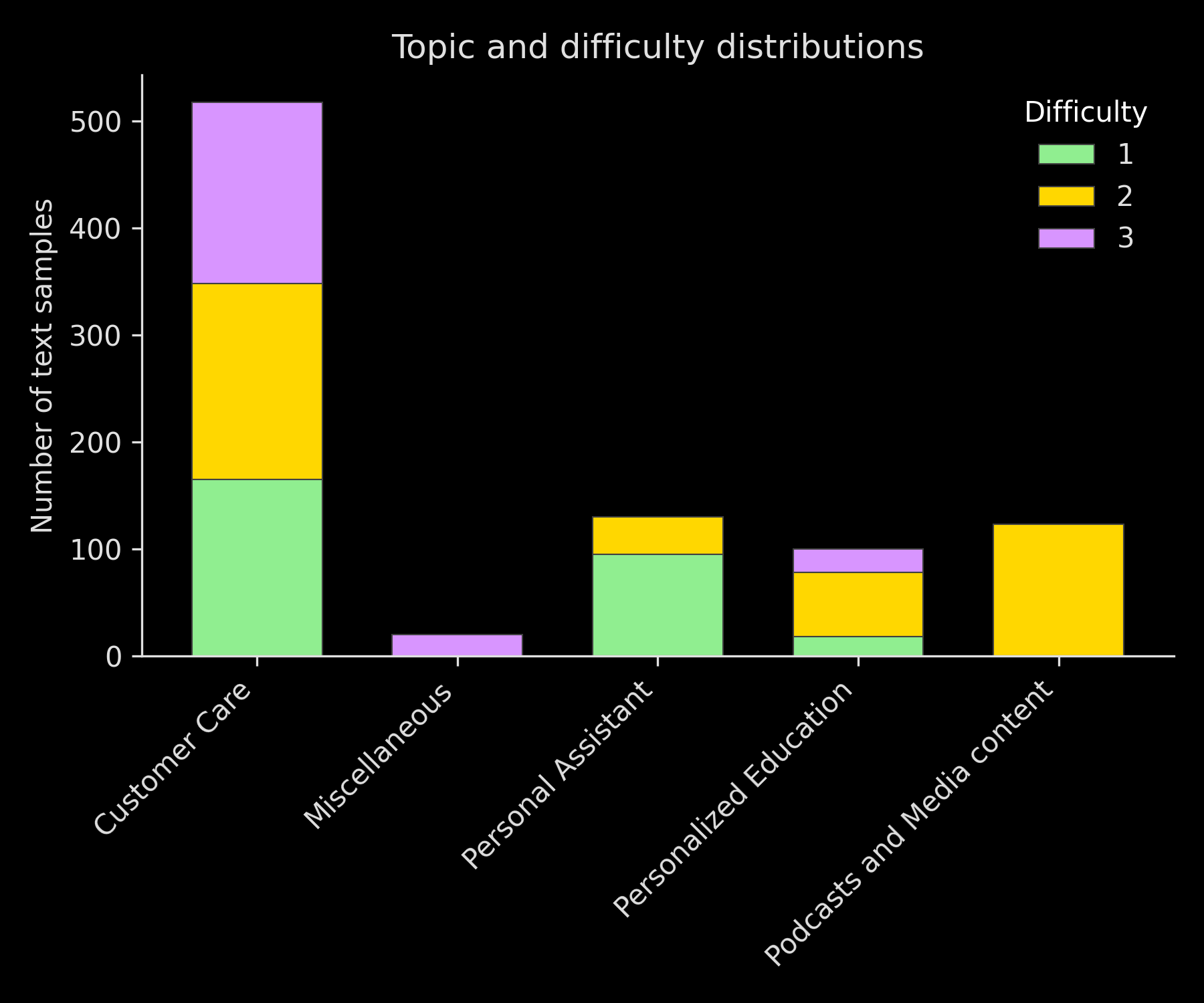
🎙️ Microsoft released VibeVoice - VibeVoice is an open-source family of frontier voice models (Automatic Speech Recognition - ASR, long-form TTS, and real-time TTS) using low-frame-rate continuous tokenizers and a next-token diffusion LLM backbone for efficient, high-fidelity long audio. (🙏 Hugo Hernandez @ Alakazam)
ASR model handles 60-minute audio in a single pass with joint ASR, diarization, and timestamps plus custom hotwords.
Long-form TTS model can generate up to 90 minutes with up to 4 speakers and expressive multilingual speech.
Realtime 0.5B TTS supports streaming input, ~300 ms first-token latency, and ~10-minute robust long-form output.
🗣️ NVIDIA open-sourced PersonaPlex-7B - PersonaPlex is a real-time full-duplex speech-to-speech model that controls persona via text role prompts and voice conditioning, built on Moshi/Helium for natural low-latency conversations. (🙏 Vincent Nallatamby)
Real-time speech-to-speech with simultaneous listening and speaking for natural dialogue.
Persona control via role prompts plus voice embeddings (NAT/VAR voices prepackaged).
Exposes Web UI server and offline CLI for wav-to-wav evaluation with CPU offload option.
Autonomous Agents
📑 Alpic featured in OpenAI documentation - Congrats to the Alpic team to appear as the first option in the OpenAI documentation for the Apps SDK deployment guide.
🔥 Community take w/ Nikolay Rodionov: “If anyone is building ChatGPT App, very interested in speaking with you!” 👉 contact him
Biotech Health And Chemistry
🔬 MOSAIC framework for AI-assisted chemical synthesis - Nature published research introducing MOSAIC (Multiple Optimized Specialists for AI-assisted Chemical Prediction), a computational framework enabling chemists to harness collective knowledge from millions of reaction protocols. Built on Llama-3.1-8B-instruct architecture, MOSAIC trains 2,498 specialized chemical experts within Voronoi-clustered spaces, delivering reproducible experimental protocols with confidence metrics for complex syntheses. (🙏 Victoire Cachoux @ Iktos)
🙈 AI hallucinations found in NeurIPS 2025 papers - GPTZero scanned 4,841 NeurIPS 2025 accepted papers and found at least 100 fabricated or heavily corrupted citations across 51–53 papers, exposing systemic LLM-driven “reference slop” that peer review missed. (🙏 Jeremie Kalfon @ ENS/Pasteur)
Hallucinations include fake papers, authors, DOIs, and misattributed venues, often mixing real metadata with invented elements.
Volume-driven reviewer overload plus widespread LLM use create a structural failure mode in citation verification.
These hallucinations violate NeurIPS/ICLR LLM policies and suggest conferences need automated source-checking in the review loop.
🔥 Community take w/ Jeremie Kalfon: “When group leaders publish 50–100 papers a year, you already know there is a serious problem somewhere. Reading the papers themselves makes it clear that the strategy is quantity over quality.”
🎞️ LatchBio Systems Reading Group talks - A collection of technical talks exploring the intersection of systems engineering and computational biology was shared, featuring presentations on LData (distributed filesystem on Postgres and S3), BINSEQ (high-performance binary formats for DNA sequences), and data infrastructure challenges in biotech. (🙏 Leonard Strouk @ .Omics, Jeremie Kalfon)
🤝 Isomorphic Labs partners with Johnson & Johnson - Isomorphic Labs announced a cross-modality, multi-target research collaboration with Johnson & Johnson. The partnership combines Isomorphic’s AI-first drug discovery approach with J&J’s expertise in development. Isomorphic Labs will handle in silico predictions and design while J&J conducts experimental assays and advances programs. (🙏 Ihab Bendidi @ Recursion)
Image Video 3D
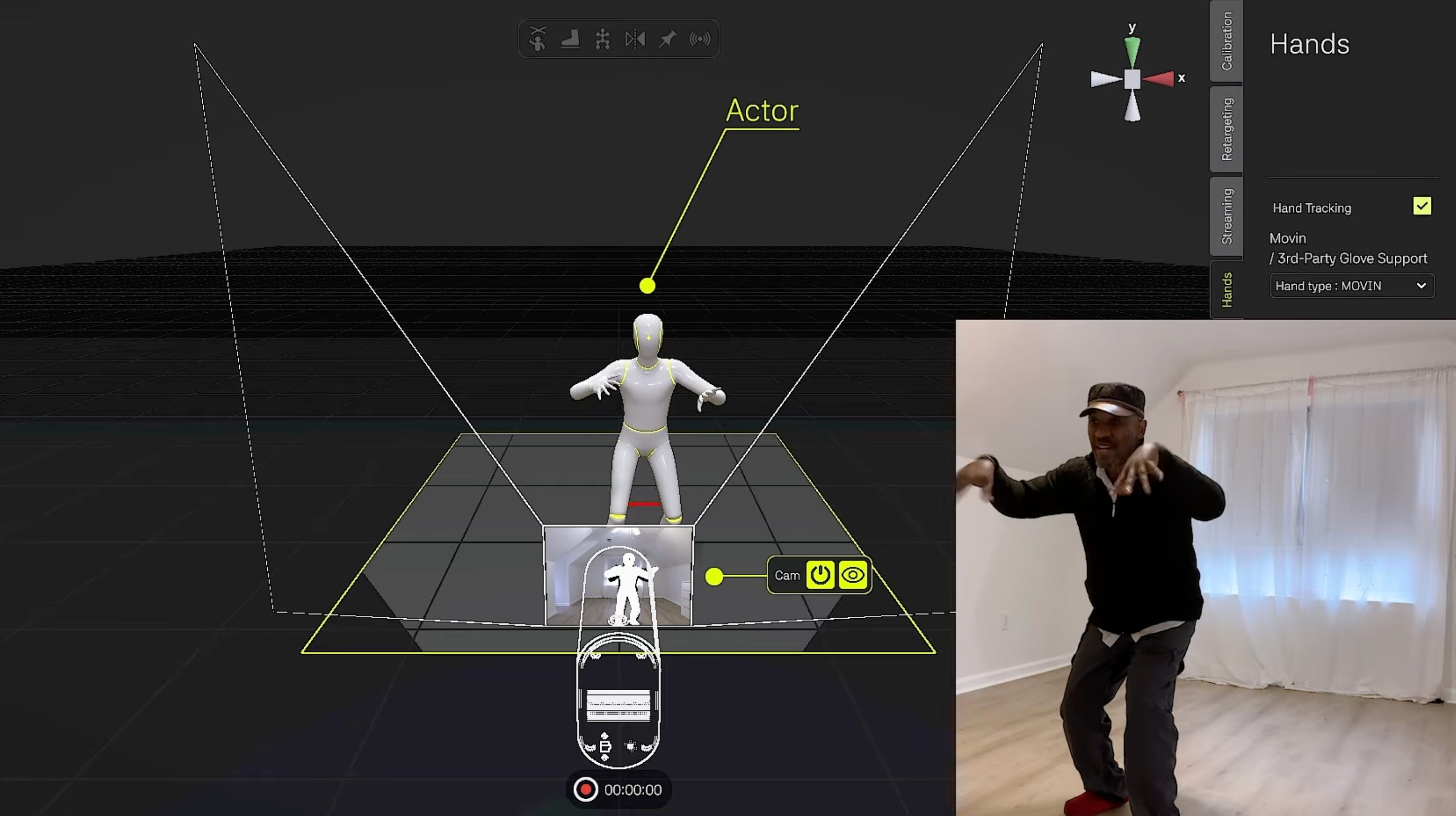
📹 MOVIN real-time markerless MOCAP system - Demonstration of MOVIN MOCAP system showcased real-time markerless motion capture with finger tracking and full body capture, requiring no mocap suit. The system, priced at approximately $11,000 (!), enables integration with Unreal Engine and iClone.
Infrastructure
🙏 Shipfox exploring GPU CI/CD runners - Shipfox is conducting product discovery on providing GPU-based runners for CI/CD pipelines, seeking to understand what tasks teams run in these environments and typical setup configurations. 👉 Reach out to Noe Charmet if you’re interested!
💬 IT security and device management discussion - Comprehensive thread on handling security and device management for scaling startups. Topics covered included minimal friction approaches to securing SaaS stacks (GSuite, GCP, Notion, Discord), lightweight MDM for company hardware, and clean offboarding workflows. Community members shared experiences with tools like Teleport, Rzilient, Fleet, Rippling, and Primo for France. Strong recommendations emerged against Dashlane, with Bitwarden and Passbolt suggested for password management. Discussion emphasized that MDM can become problematic if poorly implemented, especially for technical teams, with cautionary tales about acquisition-related MDM disasters. For small companies, Apple’s native iCloud-based remote wipe was mentioned as a simple solution. (🙏 Leonard Strouk, Lior Oren, Jérémie Bordier, Pierre Chapuis)
Language Models
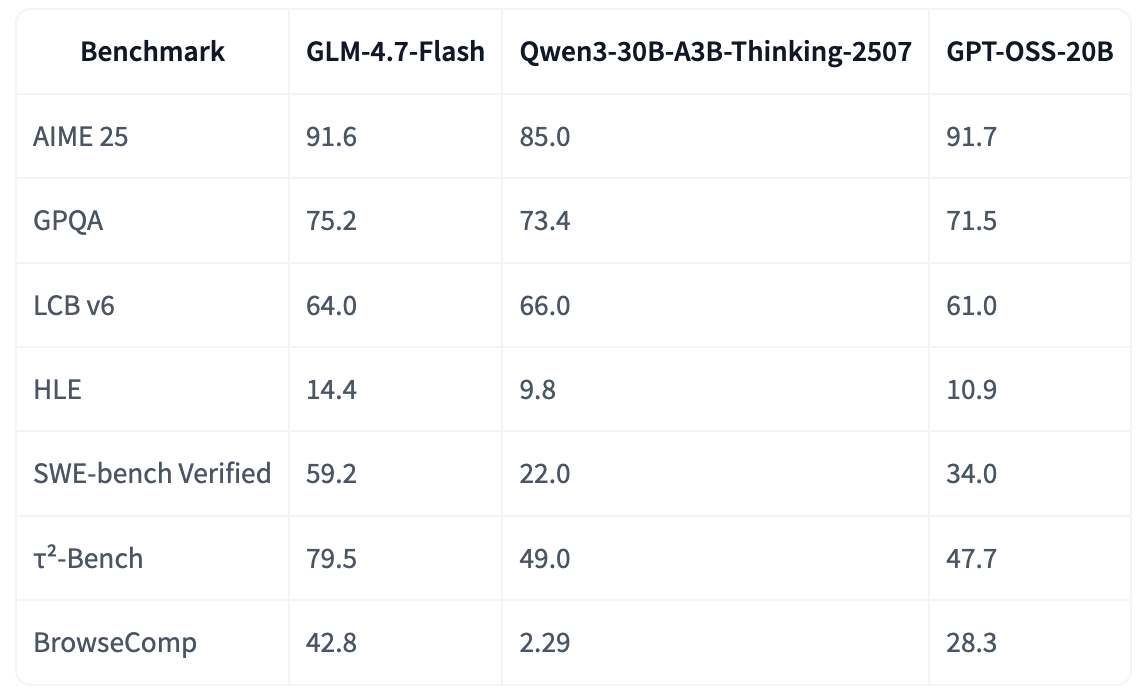
⭐️ GLM-4.7-Flash released by z-ai - GLM-4.7-Flash is a 30B-A3B MoE LLM targeting strong 30B-class performance with lightweight deployment, excelling on coding, agentic, and reasoning-heavy benchmarks versus peer 20–30B models. (🙏 Gabriel Olympie, Kemal Toprak Uçar, Maziyar Panahi @ OpenMed, Quentin Dubois @ OSS Ventures)
30B-A3B MoE with bf16/fp32 weights, designed to maximize quality-per-compute in the 30B class.
Strong results on SWE-bench Verified, τ²-Bench, and BrowseComp, indicating robust tool-use and multi-turn agent behavior.
Deployable via vLLM/SGLang main branches with specialized speculative decoding and tool/reasoning parsers (glm47/glm45).
🔥 Community take: It is seen as an impressive open alternative to Qwen3-30B-A3B, particularly for local agentic coding, and several users highlight its ability to correctly implement the Claude Code tool format, which is considered a meaningful milestone for open models. Performance feedback is mixed and strongly dependent on the inference stack. llama.cpp is widely reported as underperforming, with slow throughput, instability, and degraded speed over long contexts, while vLLM and Ollama on proper GPU setups deliver significantly better results, albeit still below some expectations for the architecture.
📊 Benchmarking LLMs for cost optimization - Analysis demonstrated that without benchmarking LLMs on actual tasks, companies likely overpay 5-10x. The study compared 100+ models on real scenarios and introduced Evalry, a platform for benchmarking custom scenarios to identify the most suitable LLM using specific datasets. (🙏 Kemal Toprak Uçar)
🔥 Community take w/ Kemal: “For proprietary LLMs, this is a great post on cost and latency analysis to help you choose the most suitable model for your use case. It also introduces Evalry, a platform that lets you benchmark your own scenarios and identify the best LLM using your own evaluation dataset.”
Programming
🤖 Fimo launched by Strapi - Strapi released Fimo, their web-based AI platform for building motion websites with AI-assisted design, CMS, and analytics built in. (🙏 Amine Saboni @ Pruna.ai)
🔥 Community take w/ Amine: “I tried building a quick app with it. It’s not very powerful and is strongly CMS-oriented, so developers are unlikely to use it. That said, the final product is well made and could still find its audience.”
🏝️ Blaxel perpetual sandbox platform - Blaxel introduced a perpetual sandbox platform maintaining infinite secure sandboxes on automatic standby with co-hosted agents for near-instant latency, achieving 25ms resume times and eliminating cold starts. (Recommended by Vincent Nallatamby)
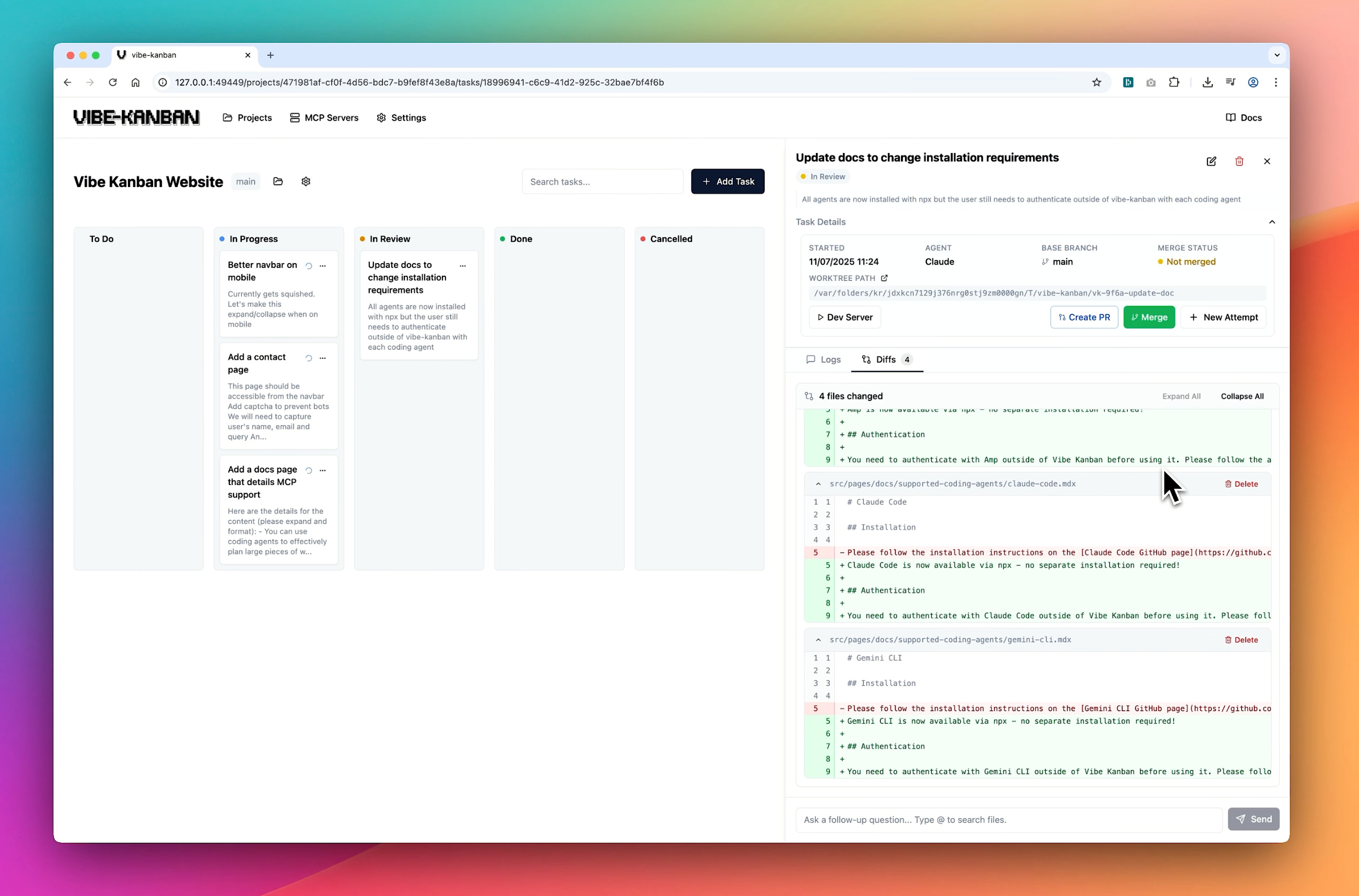
🎼 Vibe Kanban or other orchestrating AI agents - Thomas Payet is seeking for people using Vibe Kanban or alternatives for orchestrating multiple AI coding agents and tasks in parallel. (🙏 Thomas Payet @ Meilisearch)
Also:
🤔 Claude Code performance concerns - Community members reported significantly degraded performance with Claude Code over the past 72 hours, with the regular Claude app also experiencing issues including content duplication during editing and general availability problems. (🙏 Quentin Dubois, Kevin Kuipers)
🚫 Claude Code banned user unexpectedly - A developer shared their experience of being banned from Claude Code, after using it to auto-generate a CLAUDE.md that controls another Claude instance; automated prompt-injection safeguards flag this system-like loop, his paid account is instantly banned and silently refunded. (🙏 Kevin Kuipers, Anicet Nougaret @ Ariana.dev)
👵🏻 jQuery 4.0.0 released - jQuery released version 4.0.0, sparking nostalgic discussion about outdated JavaScript frameworks including Mootools, which hasn’t seen an update in 10 years. (🙏 Quentin Dubois @ OSS Ventures)
Reinforcement Learning
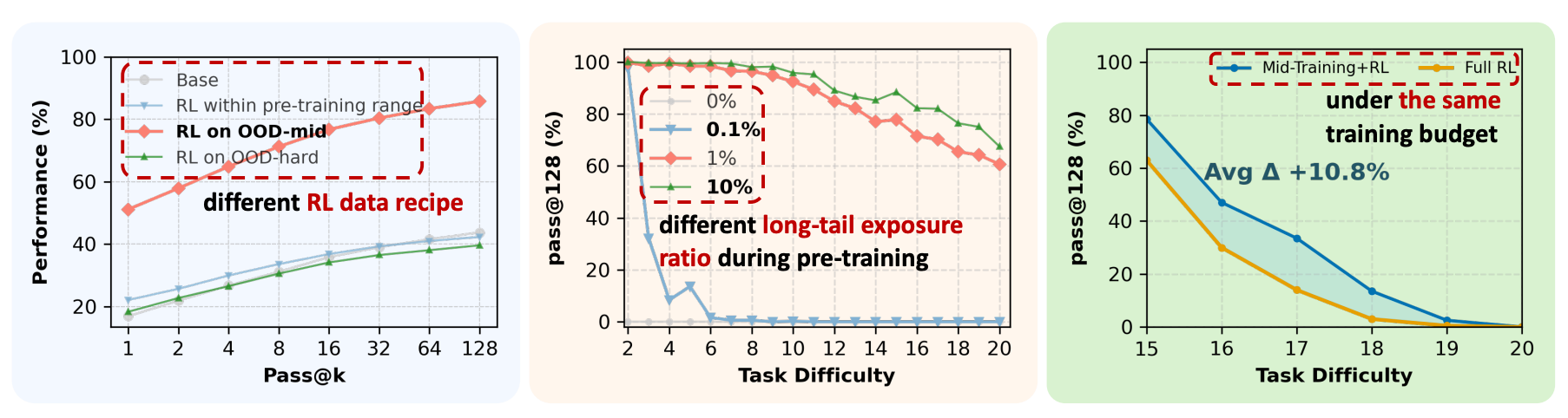
🧠 Research on RL training scope - RL on math-like tasks studies how pre-training, extra supervised training, and RL combine to improve reasoning. It finds that when and where you apply RL matters as much as how much you use. (🙏 Gabriel Olympie)
RL helps most on skills that are only partially learned in pre-training, not ones already mastered or never seen.
Training on data that are just at the model’s “edge” (not too easy, not too hard) is crucial for RL to generalize.
A mix of extra supervised training plus a modest amount of RL can beat simply doing more RL on its own.
Job Board
🌍 Founding MLOps Engineer at .omics - .omics, a techbio startup building foundation models for plant genomics and predictive breeding, is hiring a Founding MLOps Engineer to own end-to-end ML infrastructure including training, deployment, and monitoring. The role involves working with researchers and running large-scale experiments on internal GPU cluster and cloud. Location: Paris or remote (EU-friendly time zones). Contact (🙏 Leonard Strouk @ .Omics)
🇫🇷 Software Engineer and Engineering Manager at Joko - Joko, one of France’s fastest growing AI-native fintech companies with €30m+ revenue and 5 million users, is seeking software engineers and engineering managers in Paris. Contact Alexandre Hollocou directly at mentioning Reg.exe. (🙏 Margaux Wehr)
New Member
🇺🇸 Guillaume Allègre - Founder at Andromede, building a generation pipeline for high-fidelity RL environments using real-world data to train and evaluate AI agents, starting with web and tool use. Previously focused on post-training and evaluation. Based between SF, NYC, and Paris.