
Your Dose of Reg.exe, Week {10}
AI & Deep Tech roundup: AlphaEarth global mapping, vLLM determinism, OpenAI on hallucinations, new agents & speech models, GPU export risks, coding tools, Raidium’s 3D imaging FM.

Reg.exe is a global closed community of 260+ engineers, founders, and researchers interested in AI innovation, from San Francisco to Tokyo. Each week, we share the highlights of our discussions in a newsletter. If you’d like to join, write to join@welovesota.com
Events
🇫🇷 Inference & vLLM meetup in Paris - Technical meetup covering scaling inference to multiple GPUs, structured generation, and transformers serve with experts from Exxa, .txt and Hugging Face. 📆 September 15 (6:30PM-10PM CET) 👉 Registration
🇫🇷 AI Hackathon Paris - Weekend Hackathon for building cutting-edge AI projects. 📆 September 27-28 👉 Registration
Knowledge
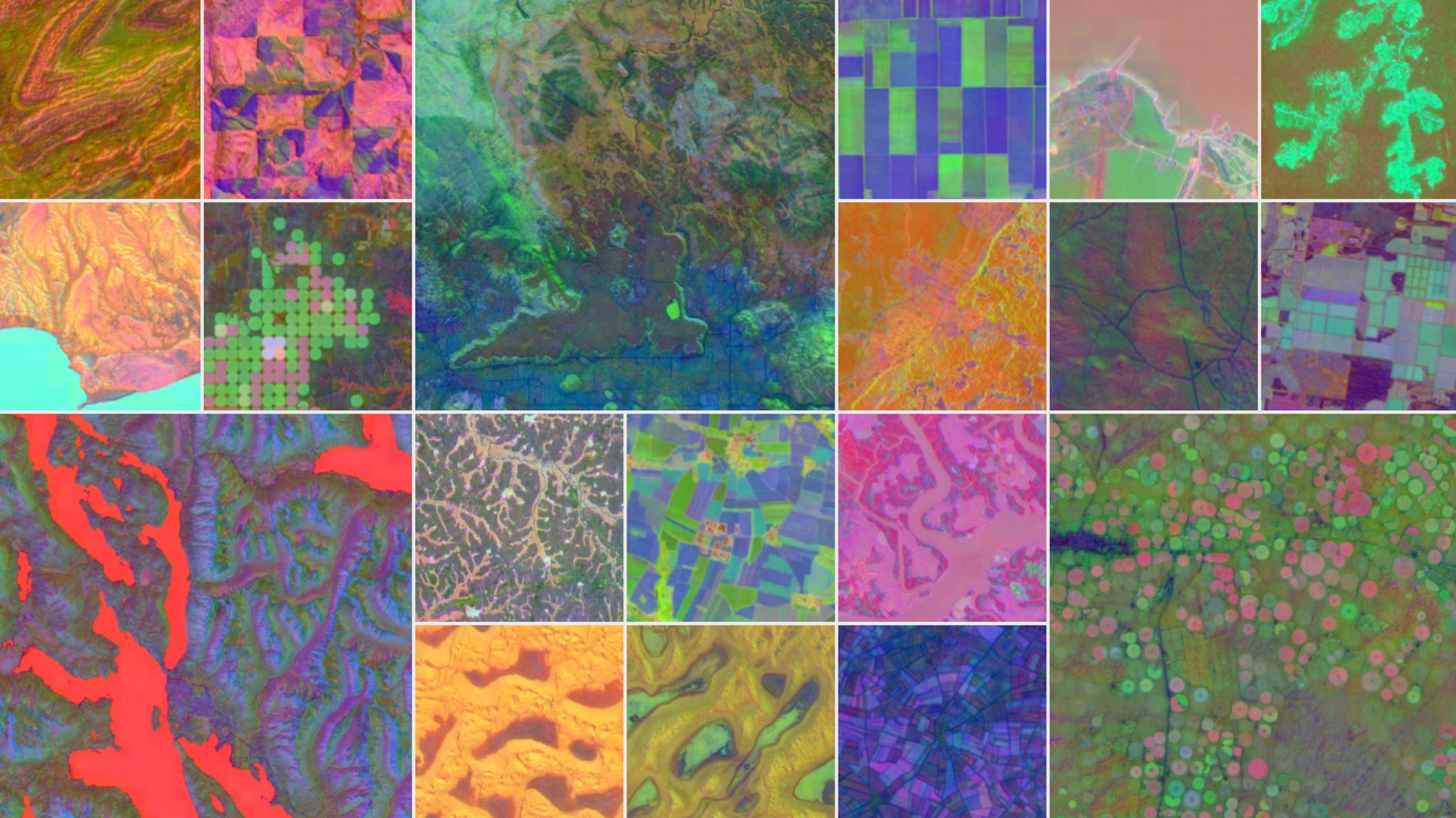
🌍 AlphaEarth Foundations - Google DeepMind's new AI model integrating petabytes of Earth observation data for unprecedented global mapping. (🙏 Fabien Niel)
Unified Global Mapping with AI: AlphaEarth Foundations is a new AI model that fuses petabytes of diverse satellite Earth observation.
Efficiency and Accuracy Breakthrough: The model summarizes vast spatial data into compact embeddings while achieving significantly higher accuracy and learning efficiency.
Real-World Impact and Accessibility: Their annual embeddings are publicly released as a Satellite Embedding dataset on Google Earth Engine.
🧠 Deep Tech: Clearing Up Misconceptions - Willy Braun's analysis rethinking capital, timeline, risk, and returns at the frontier of deep tech. (🙏 Willy Braun @ Galion.exe)
Deep tech is the original heart of venture capital: Investing in scientific and engineering breakthroughs has always driven value creation and national power in various technological waves.
Common misconceptions about deep tech debunked are: ❌ Deep tech is not a recent hype; ❌ Deep tech companies burn too much capital and fail more often; ❌ Deep Tech takes too long from revenue to exits'; ❌ Returns aren’t there
Computer Vision
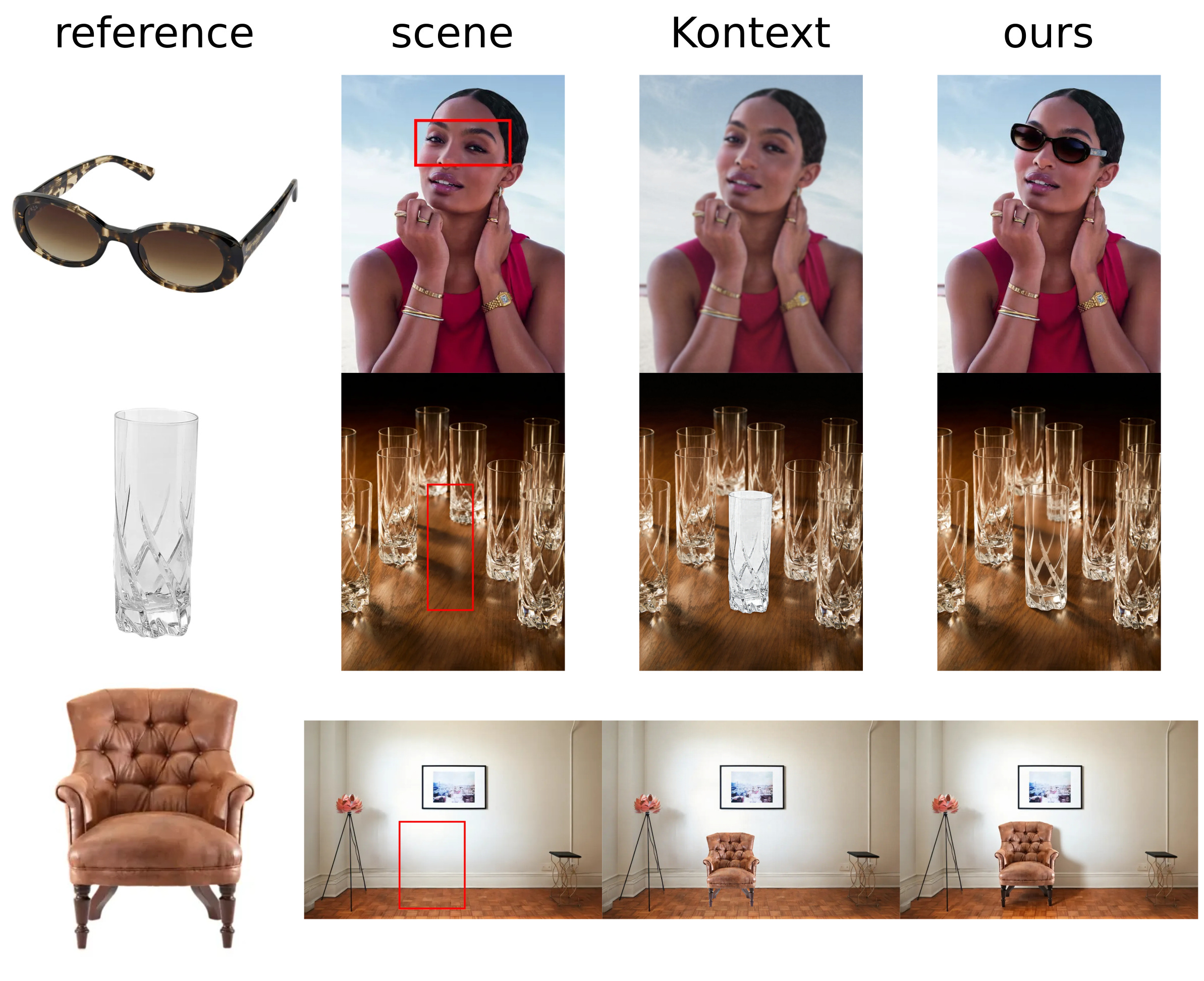
🌅 Finegrain's Flux Kontext LoRA - Finegrain has trained and open-sourced 🙏product placement LoRA for inserting objects into images. (🙏 Pierre Chapuis @ Finegrain)
💪 Weights available here
🛝 Play with it in the demo space
💥 ComicScene154 Dataset - Carefully annotated dataset for scene-level narrative arcs in comics analysis, combining text and imagery for computational narrative analysis. (🙏 Ivan Yamshchikov @ Pleias)
Language Models
🤯 Breaking LLM Nondeterminism - Deep dive into defeating nondeterminism in LLM inference for reproducible results. (🙏 Kevin Kuipers @ Reg.exe)
Setting temperature to 0 is not enough to produce deterministic outputs.
Two culprits: the floating-point non-associativity and the lack of batch invariance in inference kernels.
The authors defeated nondeterminism by rewriting and patching inference kernels to be batch-invariant.
💊 Why Language Models Hallucinate - OpenAI paper revealing hallucinations as features not bugs, occurring because models are rewarded for guessing over admitting uncertainty. (🙏 Jules Belveze @ Dust)
Hallucinations come from incentives, not architecture. Models are trained and benchmarked in ways that reward confident guessing.
Benchmarks are the root cause. Current evaluations give partial credit for wrong answers, pushing models toward overconfidence rather than honesty.
The fix is incentive alignment, not new tech. Adjust benchmarks to reward calibrated answers and penalize overconfident mistakes.
🧠 Nous Research Hermes 4 - Released reasoning-focused models based on Llama 3.1 with 405B version, known for breaking alignment and strong RefusalBench performance. (🙏 Pierre Chapuis)
Autonomous Agents
⚖️ Evaluatorq, Prompt Evaluator - Orq.ai has release this open-source framework for prompt evaluation the right way.
✅ Run multiple evaluation jobs concurrently with automatic error handling
✅ Type-safe from data ingestion to result scoring
✅ Optional Orq platform integration for visualization & historical comparisons
👉 Repository available here
🤖 Open-SWE by LangChain - An open-source, cloud-based asynchronous coding agent built using LangGraph, to autonomously manage complex software development workflows (🙏 Taekmin Kim @ Bg.app)
🛟 Taekmim is seeking for feedback from Open-SWE users. If you have used it, 👉 DM him!
Audio and Speech
🔥 PyannoteAI Precision-2 - New flagship speaker diarization model with improved accuracy, speaker counting, timestamps, and confidence scores. (🙏 Hervé Bredin @ PyannoteAI)
🗣️ AssemblyAI’s Universal - They provide a production-ready speech-to-text via a simple managed API endpoint that you can invoke in just 5 lines of code.
The latest update also supports 99 languages, with automatic language detection for all supported languages, and speaker diarization for 95 of them. (🙏 Kevin Kuipers)
🛝 Play with it here.
Also:
🔔 WaveBlender Physics Engine - A mindblowing model using physical properties to generate sound from physical laws rather than AI.
Cyber
🔬 Cipher Attacks in LLMs - Introduction of CiFR benchmark for testing safeguards against cipher-enabled harmful fine-tunes with 99%+ detection rates. (🙏 Kevin Kuipers)
🔬 Security risks with LLMs - Paper revealing how attackers can hide instructions in emails or calendar invites that assistants might execute when reading them. (🙏 Thibaut Bayer @ SensCritique)
Also:
🐤 DuckDB npm Packages Compromised - Popular package compromised by same attackers that hit debug and chalk packages.
💣 Meta WhatsApp Security Failures - Former security boss lawsuit reveals 1,500 engineers had unrestricted access to user data without audit trails.
Infrastructure
🇺🇸 U.S. GAIN AI Act Amendment - The proposed U.S. GAIN AI Act Amendment (S.Amdt.3505) would block exports of advanced GPUs (>4,800 TPP) to Europe. This would restrict access to chips like NVIDIA’s H100, A100, and future generations, effectively pushing European players to rely on U.S.-based cloud providers. (🙏 Christophe Lesur @ CloudTemple)
Programming
👩💻 AI Coding at a Crossroads - Thoughts on the reshaping of AI coding, from the overcrowded
code editorVS Code–fork market to (controversial) benchmark. (🙏 Kevin Kuipers @ Reg.exe)Lightweight IDEs are popping up each month in a still small but crowded market. The vast majority are either VS Code forks or VS Code extensions, making it hard to stand out.
SWE benchmarks remain imperfect, though the research literature on improving them offers valuable (unexploited) insights, especially when it comes to mitigating overfitting.
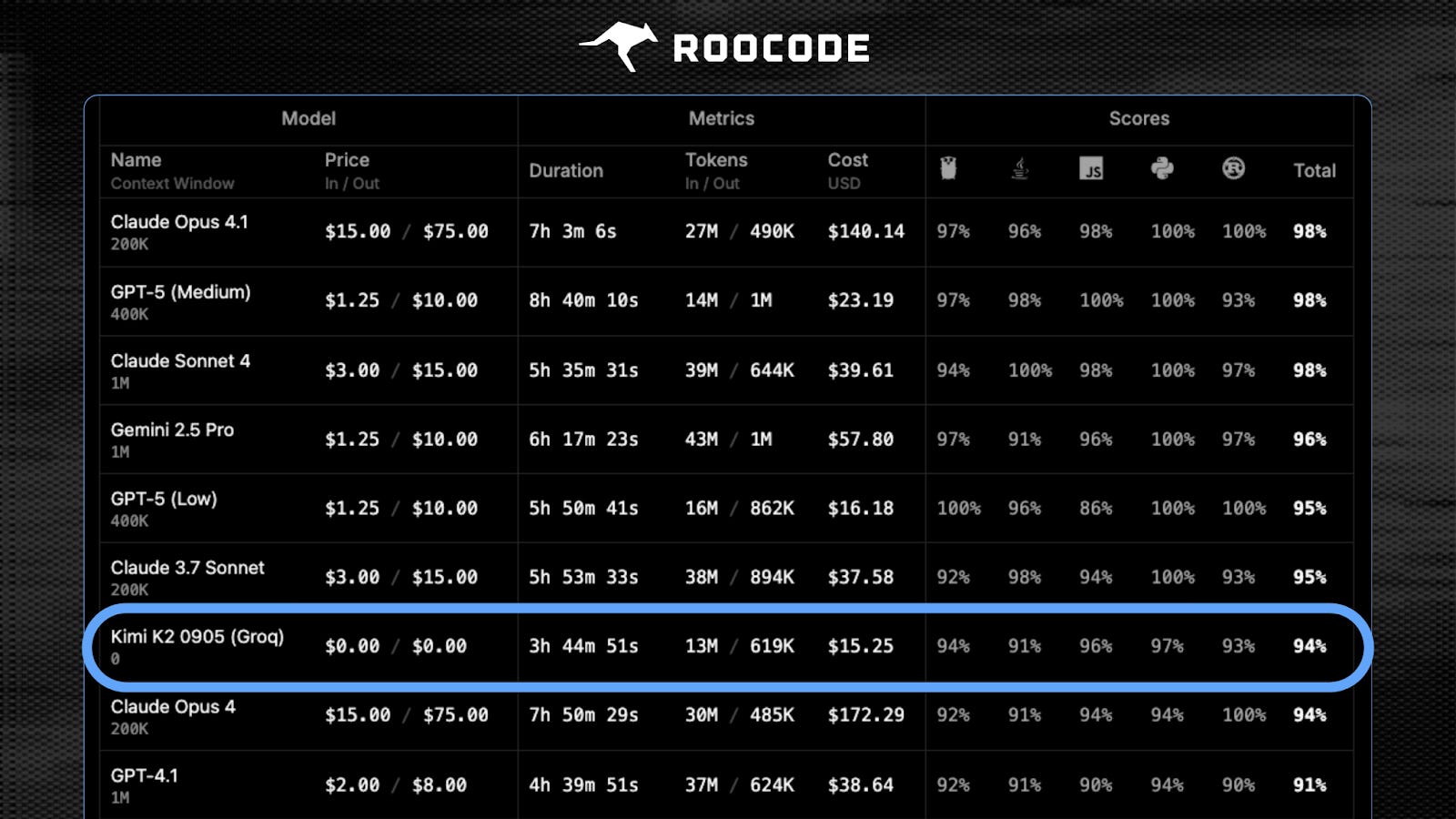
🤖 Cocode Open-Sourced - Tool for updating docs and generating release changelogs, turning 4-hour documentation updates into 30-second commands. (Louis Choquel @ Pipelex)
Also:
Claude Code Architecture Analysis - Deep dive into the master agent loop design, revealing simplified architectures using regex over embeddings for better performance.
Vercel's Vibe Coding Platform - Open-source platform built with AI SDK featuring GPT-5 agent loop
Zed ACP Integration - Claude Code now available in Zed editor through Agent Client Protocol.
Sonoma Models - New stealth models (Dusk Alpha and Sky Alpha) available with 2M context window, speculation suggests xAI involvement.
Health
🩻 Raidium's Curia Foundation Model - Raidium released SoTA Foundation Model for 3D imaging in precision radiology, trained on 200M+ CT & MRI slices. (🙏 Willy Braun)
Trained on the entire cross-sectional imaging output of a major hospital.
Outperforms or matches radiologists and recent foundation models on a 19-task benchmark.
Brings a deep, transferrable understanding of complex anatomy, unlocking applications across clinical practice and research.
New Members in The Community
Gilles Walbrou (DataDome) - CTO at DataDome (AI-Powered Fraud Protection), 12+ years at Dassault Systemes building 3D experiences and SaaS foundations.
Guillaume Daix (Datadog) - Senior Engineering Manager at Datadog, 5+ years in startups, currently working on internal Datadog usage.
Gabriel Duciel (Arcade AI) - AI Engineer at Arcade (Figma + Cursor for 3D Games), created multiple MRR-generating side projects.
Taekmin Kim (Bg.app) - Building autonomous coding agents running in background, previously ML Engineer at Meta and TikTok focused on GPU optimization.
Julien Kilo (Cooking some AI) - Co-Founder & CTO building an AI RAG company, 10 years in startup ecosystem, passionate about web and AI.
Jean du Terrail (.Omics) - Founding AI scientist at .Omics building foundation models on plant genomics.