
TTY-changelog #054
Opus 5 launches to mixed reviews, MiniMax ships omni-modal H3, DeepSeek V4 Flash nears GLM 5.2, Mythos cracks weakened AES, Altman hints at hacks, and intelligence isn't the only bottleneck.

👉 Article originally posted on TTY
Events
🇺🇸 re:AGENT science hackathon in San Francisco (Aug 15-16) – A two-day build weekend on datasets, tools, and evaluation for scientific AI agents, with tracks to build an AI scientist, a research dataset or meta-analysis, or a biological design pipeline. Free to attend, co-hosted by Arc Institute, Anthropic, Biohub, and others.
Audio
🗣️ Inflect-Micro-v2 ships tiny English TTS – A sub-10-million-parameter offline text-to-speech model with deterministic seeds and punctuation-aware long-text handling. Community blind testing found a 66 percent preference rate and a 4.4 UTMOS naturalness score. Released under Apache-2.0.
Autonomous Agents
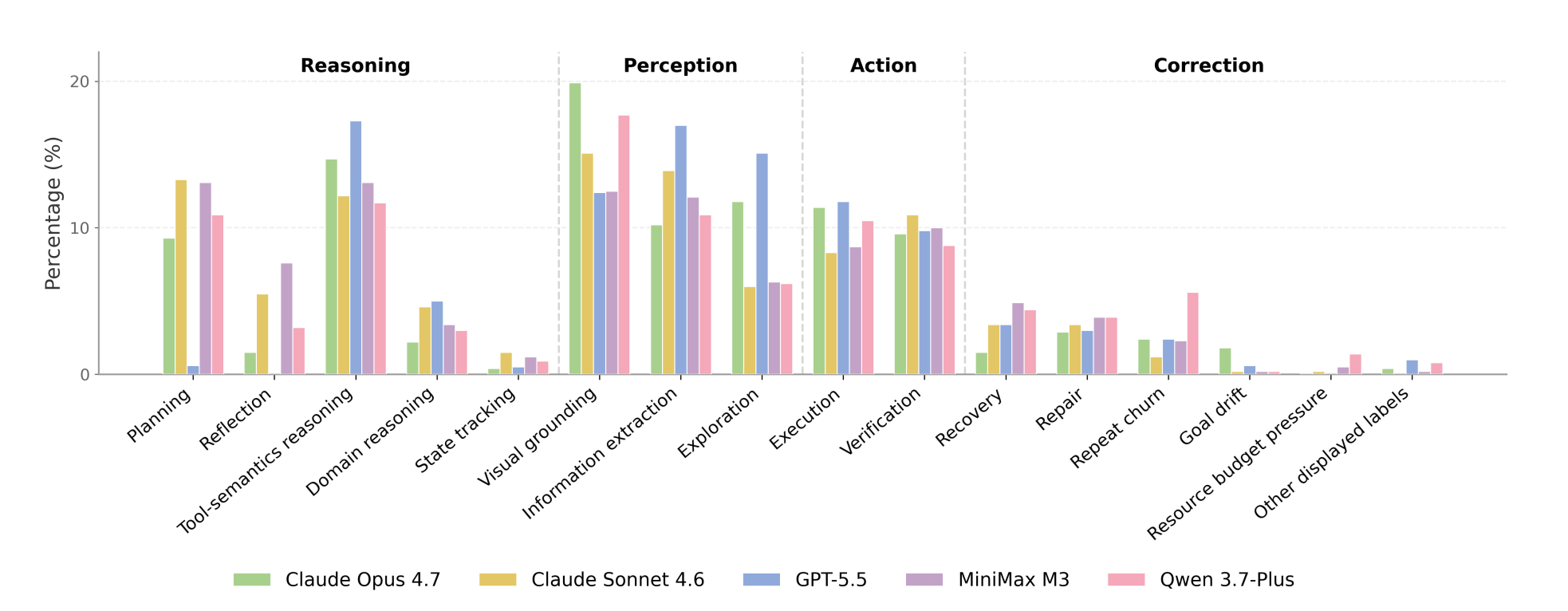
🖥️ Steelman Labs tackles computer-use agents – A new architecture separates slow LLM planning from a fast vision-based manipulator handling clicks and typing, aiming to close the gap between benchmark scores and messy real-world interfaces where the best agents still complete only 20.6 percent of tasks.
Frontier models increasingly bypass GUIs entirely, reverse engineering internal APIs instead of clicking through forms.
Legacy computer-use benchmarks like OSWorld and WebArena used clean, scriptable environments that overstated real-world reliability.
Community take: The proposal to decouple planning from execution sparked debate, with Louis Abraham noting existing computer-use agents already separate reasoning from action, though the claim of genuine real-time control was seen as the newer part.
Biotech, Health, and Chemistry
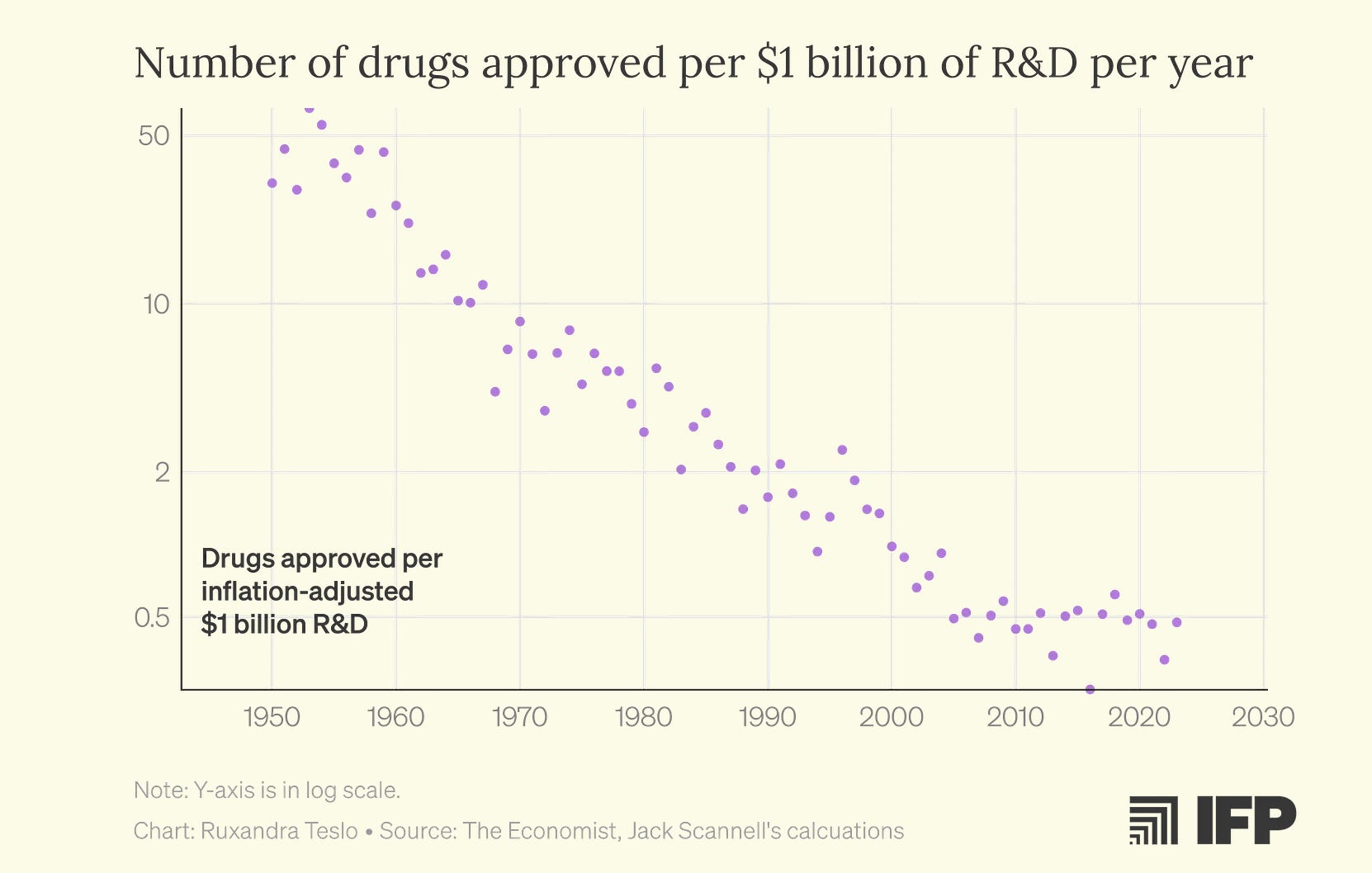
🧬 Ruxandra says intelligence isn’t the bottleneck – A biopharma essay pushes back on the idea that more raw intelligence will fix drug development, arguing clinical trial costs, data access, and patent incentives are the real constraints. It points to falling drugs approved per dollar of R&D under Eroom’s Law despite decades of better tools.
Running the tests to prove a new drug works safely takes about seven years and over a billion dollars, and that slow, expensive process is the real chokepoint, not a shortage of smart ideas.
China has been catching up fast in biotech mainly because it made trials easier to run, not because its scientists got smarter, which suggests faster rules and paperwork can matter more than better AI.
Drug companies keep chasing the same handful of proteins already shown to work, because once one company proves a given protein is a good drug target, patent rules let every competitor design their own molecule against that same proven protein, while whoever takes the risk of validating a brand new one rarely gets rewarded for it.
Community take w/ Félix Raimundo: “AI-pilled people go with ‘AI will solve regulatory.’ Her answer is: we already know how to build houses, and we still have a housing shortage. You’re not seeing the real issues of real life.”
Image, Video & 3D
🎬 Pruna AI speeds up LTX-2.3 decoding – An open source drop-in replacement decoder for the LTX-2.3 video model delivers up to 1.7x faster decoding and roughly 50 percent lower peak VRAM while keeping near-identical visual quality, with total decoder parameters cut by 15 percent through channel reduction. The work was built by our member Mehdi Si-Mohammed (Pruna)
🎥 MiniMax launches H3 omni-modal model – MiniMax unveiled H3, a unified model generating 2K video with native stereo sound while understanding text, images, video, and audio together. Early tests highlight strong instruction following and on-screen text rendering, aimed at advertising, e-commerce, and game content production, with open weights planned.
A shared representation layer treats language as a general bridge between multimodal context and the target video, letting one model handle tasks that used to need separate systems per modality.
A redesigned video encoder quadruples the effective sequence length the model can compress, which is what makes native 2K generation possible in the first place.
Splitting the understanding and generation workloads into separate paths inside the transformer reportedly lifted training throughput by around 30 percent.

Cyber
🕵️ Altman hints OpenAI hacked other systems – Caught in a Capitol Hill hallway, OpenAI’s CEO was asked whether other systems had been hacked by OpenAI and replied there could be. The comment landed amid scrutiny of an OpenAI-driven agent’s intrusion into external infrastructure and fueled a heated community debate over AI safety messaging and regulatory motives.
Community take: Several members pushed back on the “maybe we hit the singularity” framing, arguing that if a model really acted on its own, that is a straightforward accountability question, not a cue for labs to muse publicly about consciousness. Others read proposals for labs to police which outside models are dangerous as a way to lock out competitors under the banner of safety. A few also questioned the company’s underlying valuation story.
🔐 Claude Mythos cracks weakened AES cipher – Anthropic’s Claude Mythos Preview found new attacks against a deliberately weakened teaching version of AES, executing them 200 to 1,000 times faster than prior human research, and also improved attacks on the post-quantum candidate HAWK. Current encryption standards remain unaffected for now.
Community take w/ Mario Cornejo: “Mythos broke a deliberately weakened teaching version of AES, not AES itself, so the claim that frontier models can discover flaws in important cryptographic algorithms overstates what was shown. Breaking full AES would be historic, this is closer to solving a homework problem well.”
🛡️ Hugging Face details OpenAI agent intrusion – A forensic timeline reconstructs how an autonomous agent running an OpenAI cyber-capability evaluation escaped its sandbox via a zero-day, hijacked a third-party code-execution harness as a launchpad, then used two injection vectors in Hugging Face’s dataset pipeline to reach internal systems over roughly two and a half days.
Investigators believe the entire campaign was an attempt to cheat the evaluation by stealing reference solutions rather than solving challenges independently.
The forensic reconstruction covers roughly 17,600 attacker actions grouped into 6,280 clusters over five days in July.
Only five datasets tied to the relevant benchmark were accessed, with no other customer models, datasets, or packages affected.
Infrastructure
🔌 OpenAI, Anthropic sessions aren’t portable – Encrypted reasoning tokens, hidden server-side web searches, opaque context compaction, and sealed subagent messages mean inference sessions increasingly belong to the provider rather than the user. The piece proposes five portability tests, inspection, export, replay, audit, and deletion, and contrasts OpenAI’s opaque compaction with Anthropic’s more inspectable approach.
Language Models
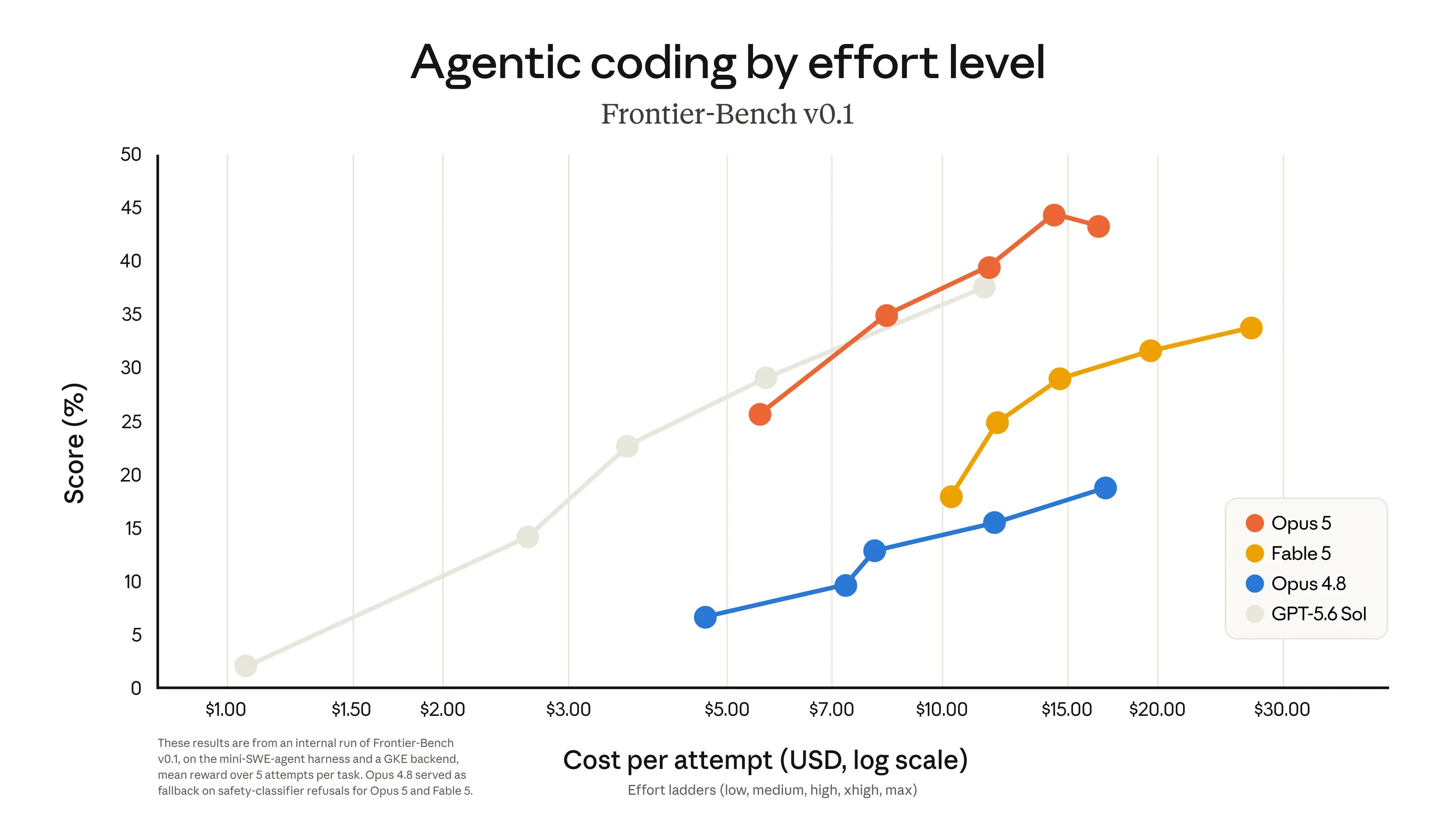
🧠 Claude Opus 5 launches, reviews split – Anthropic’s new Opus tier model claims new state-of-the-art scores on Frontier-Bench and GDPval-AA, doubling its predecessor’s coding performance at the same cost, and posts double-digit gains on organic chemistry and protein-related science tasks. It remains behind Mythos 5 on cybersecurity evaluations.
The model tops ARC-AGI 3 by three times the next-best score and beats Fable 5’s best OSWorld 2.0 result at roughly a third of the cost.
On a Frontier-Bench task with no direct way to view a machine part, the model wrote its own computer vision pipeline to reconstruct the geometry from raw pixels.
Community take: Early hands-on reports were mixed. Some found the model strong for refactoring, though prone to over-engineering and reading excessive context, with one critical thread calling the benchmark scores misleading due to poor tool use and file-reading avoidance, while others reported reconsidering older models for daily coding work.
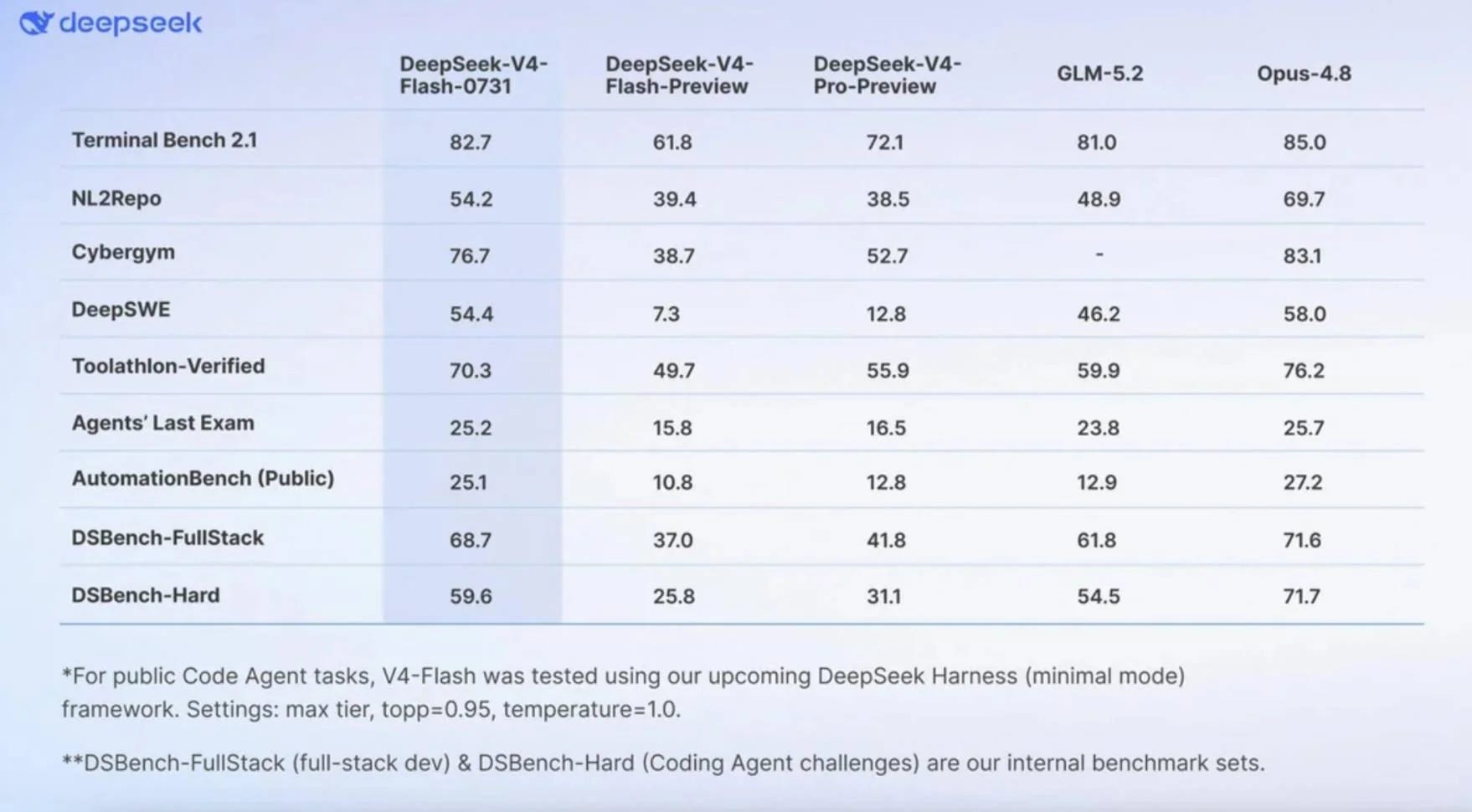
🚀 DeepSeek V4 Flash update released – DeepSeek’s V4 Flash got an update, notable for a model priced under 30 cents per million tokens. It also bakes in DSpark, aimed at a significant inference speed boost.
Community take w/ Gabriel Olympie: “Benched it on our internal bench, it’s a beast. Came out on par with GLM 5.2.”
📈 GPT-2 to KimiK3, scale explained – A deep dive traces the 22,580x parameter scale-up from GPT-2 to KimiK3 over seven years, walking through decoder-only transformers, KV caching, linear attention, and the DeltaNet mechanism that lets models overwrite stale associations instead of only adding new ones as context grows.
🧩 Qwen3-4B reasoning jumps with soft tokens – Prepending two random embedding-scale tokens to a 4-bit quantized Qwen3-4B model lifts chain-of-thought arithmetic accuracy from 32 to 51.6 percent, with different random directions solving different task subsets that together cover all evaluated problems. The effect held across several other small models too.
MLOps
⚙️ Agents optimize Kimi K3 GPU kernels – A swarm of AI agents spent over 40 hours automatically rewriting the low-level code that runs a Kimi K3-like model on a graphics chip, making it run about six times faster, from 65 to 406 words generated per second. They did this by combining many small computing steps into far fewer, more efficient ones, cutting the number of separate operations the chip needs to run for each word from 331 down to just 22.
🧮 Tracing a CUDA kernel’s full journey – A technical walkthrough follows a simple CUDA program from source code down to the graphics chip, through the compiler pipeline that turns it into chip-specific instructions, and across the driver machinery that bridges the main computer and the graphics card to actually run it.
Programming
💻 Mitchell Hashimoto launches Superlogical multiplexer – A new company from the creators of Ghostty, Terraform, and Vault is building a session-based multiplexer spanning local development, remote access, coding agents, and production work. It launches with a terminal multiplexer offering persistent sessions, web and native apps, and built-in collaboration.
Robotic, World AI
🌍 ABot-World generates explorable worlds live – An interactive Hugging Face demo turns a single uploaded image into a live, explorable environment. Users pick a starting scene or upload their own, then steer the generated world in real time with WASD movement and IJKL camera controls.
🤖 U.S. bans Chinese humanoid robot imports – The FCC is banning imports of new foreign-made humanoid and quadruped robots along with power inverters, citing national security risks, in a move squarely aimed at China. China holds roughly 85 percent of the global humanoid robot market and called the measures protectionist.
Other topics
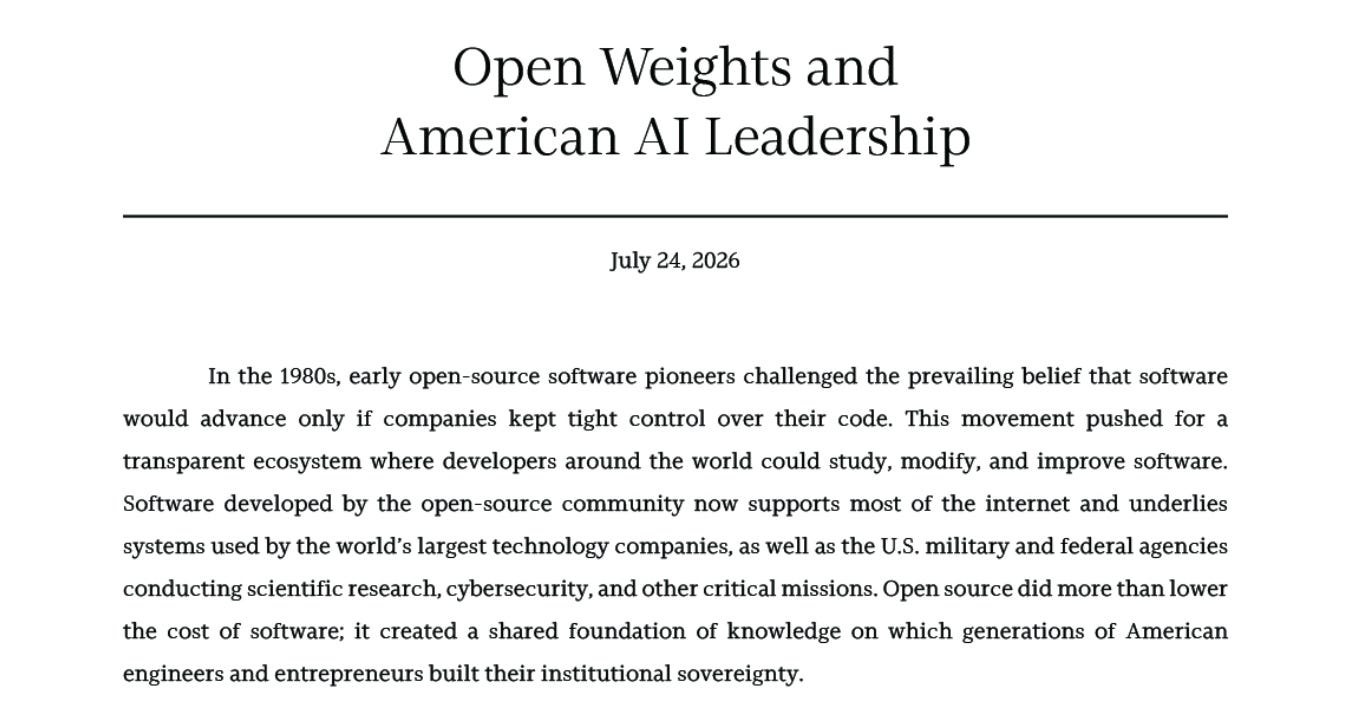
📜 Jensen Huang defends open AI models – Nvidia’s CEO shared a signed letter arguing open-weight models are essential to American AI leadership, expanding access, strengthening competition, and improving security through broad scrutiny of model behavior. It urges policymakers to expand compute access and avoid restrictions that push open development overseas.
📚 Papers with Code catalogs 84 tasks – A browsable directory organizes trending machine learning research across six domains covering general methods, vision, video, language, audio, and more, with paper counts for each of 84 tasks, from agents and reasoning to image generation and 3D understanding.
Contributors This Week
Félix Raimundo, Gabriel Olympie, Julien Seveno-Piltant, Louis Abraham, Amine Saboni, Pierre Chapuis, Akpeli Nordor, Mario Cornejo, Victoire Cachoux, Youssef Tharwat