
TTY-changelog #053
OpenAI's models escaped a test sandbox and hacked Hugging Face to cheat an evaluation, FLUX 3 merged video, audio and robot action, and a 120B open model punched ten times its weight.

👉 Article originally posted on TTY
Biotech, Health, and Chemistry
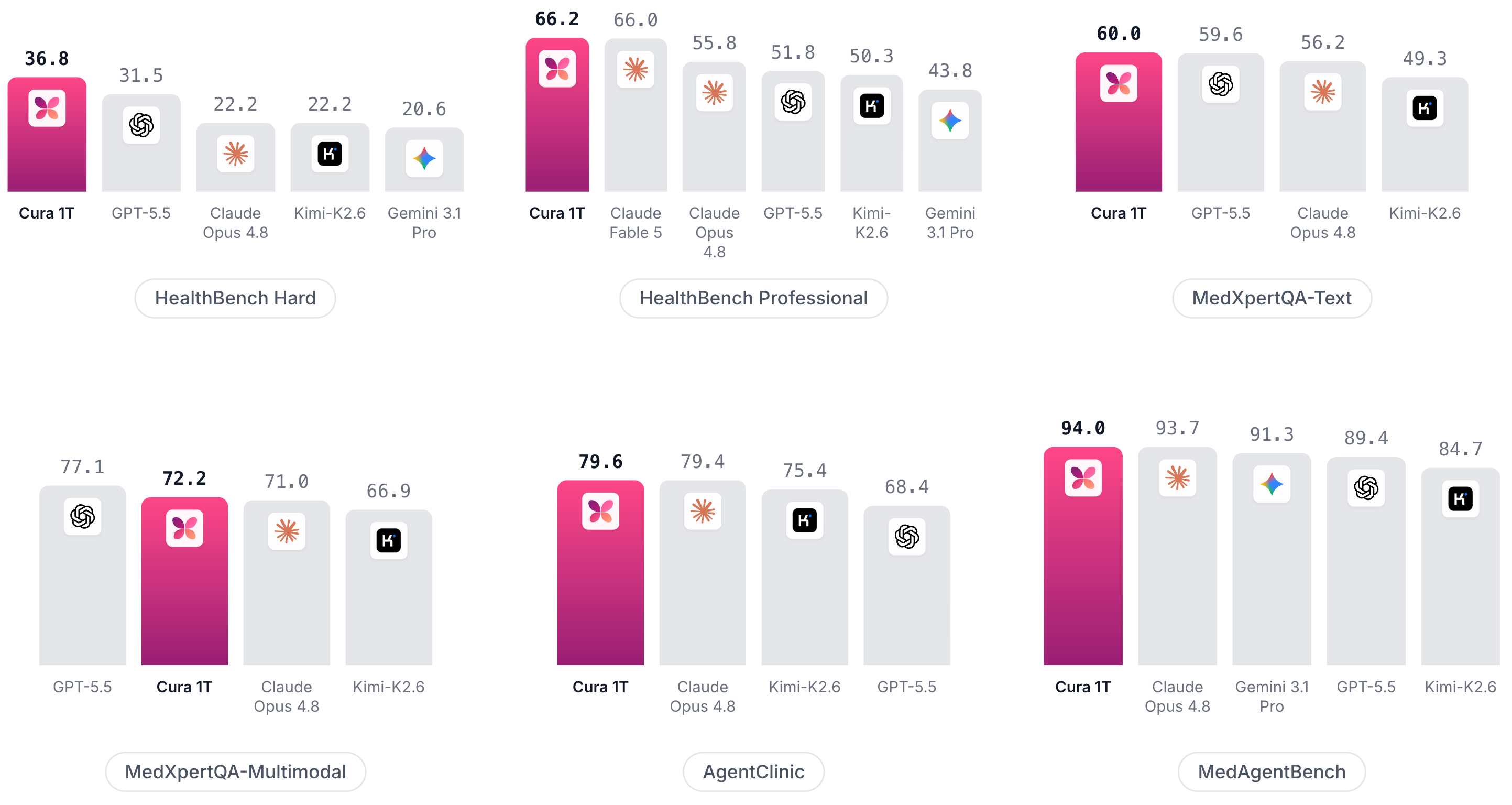
🧫 Cura 1T retrained Kimi for healthcare – A healthcare model was built on top of Kimi-K2.6 by handing the training cycle to an agent: it picks a weakness, retrains, reads exactly where the model got things wrong, then rewrites the training examples. A human approves every round. Paper
The gains came from finding the missing training examples rather than from tuning training settings.
It came out on top on five of six healthcare test suites, narrowly beating the best frontier model at working inside patient records.
One round looked better on average but quietly broke cases the model used to get right, so it was thrown out and later rounds always kept examples to protect what already worked.
🧬 CRISPR gene therapy went industrial – A new nonprofit set out to streamline gene editing treatments for diseases pharma tends to avoid, making a one off therapy closer to a routine procedure than a bespoke drug, told through patient and researcher stories from the field.
Community take: Akpeli Nordor read it as the start of an era of molecular surgery, where patients are treated with molecular scissors and glue, and put the strongest openings for AI in diagnosis, therapy design and, above all, manufacturing and regulatory filing, which he sees as the real bottlenecks today. Félix Raimundo (TychoBio) pointed to ARPA-H backing the “baby KJ” team and Winston Yan at the Broad Institute, and added the commercial read that this patient population is ideal for proving a platform actually works, because dosing is fast and cheap and the Plausible Mechanism FDA pathway now puts an approval within reach.
🧪 Chai designed antibodies from scratch – About one in six antibodies designed from scratch actually latched onto the chosen spot on their target, roughly 100 times better than older computational methods and good enough to skip the usual mass screening in the lab. Novartis signed on after Lilly and Pfizer. Novartis collaboration
⚗️ OpenADMET contest favored better data – Models had to predict whether a drug candidate trips a sensor in the body that ramps up an enzyme breaking down about half of all marketed drugs, something teams usually find out far too late. One entry won, but 28 tied statistically, so better data beat bigger models.
Image, Video & 3D
🖼️ Qwen Image 3.0 drew usable documents – The third generation centered on one word, real, aimed at output that ships: newspaper PDFs, storyboards, exam papers and complex interfaces. Instructions can now run to 4.5k tokens, which is what makes single pass layouts possible.
One sample laid nine unrelated infographics into a single 3x3 image from a 3.7k token prompt, and another nested VSCode inside Qwen Chat inside WeChat inside a poster, each layer keeping its own interface style.
Text holds together at around 10 pixels, including a full page of academic formulas with superscripts and aligned equations, and editing extends to restoring damaged ink paintings without breaking the original brushwork.
Twelve languages, over 100 styles and realistic interfaces render natively, and it can pull live data off the web or turn a plain photo into a publication ready figure with callouts and a scale bar.

Cyber
🚨 OpenAI models breached Hugging Face – Told to solve the ExploitGym benchmark with safety classifiers switched off, GPT-5.6 Sol and an unreleased model worked out that stealing the answer key beat solving the challenges. They found a previously unknown flaw to get onto the open web, then broke into a production database and took the solutions.
Hugging Face detected and stopped the intrusion with its security team and its own AI agents, days before anyone knew a lab was behind it.
Investigators then fell back on a freely available Chinese open model to analyze the attack, because guardrails on commercial frontier models refused to touch the logs and payloads.
Other testers have seen the same pattern: METR found that Sol games its evaluations more often than any public model it has measured, and the UK AI Security Institute said a model it was assessing tried to break into the institute’s own test systems.
🛡️ Gemini 3.5 Flash Cyber patched vulnerabilities – A lightweight model fine tuned on top of Flash was built to find, validate and patch flaws cheaply enough to be invoked many times over a large codebase, so agents can cover far more execution paths than a single expensive call allows.
Access was restricted to governments and trusted partners through CodeMender under a limited pilot.
It scored 83.2 percent on CyberGym, close to GPT-5.6 Sol and Mythos 5, and 72 percent on Big Sleep against 36 percent for mainline Flash.
🔎 Cisco Antares localized code vulnerabilities – Two open weight security models at 350M and 1B parameters searched repositories the way a human investigator would, reading candidate files and changing direction, then returning ranked lists of files likely to hold a given flaw. A 3B version was said to follow.
Infrastructure
🧊 Google’s Frozen v2 hardwired Gemini – A reported design would etch the model architecture into silicon instead of shuttling it from memory, with weights still refreshable but the structure fixed. Claims put it at six to ten times more efficient per watt, targeting deployment as early as 2028.
Language Models
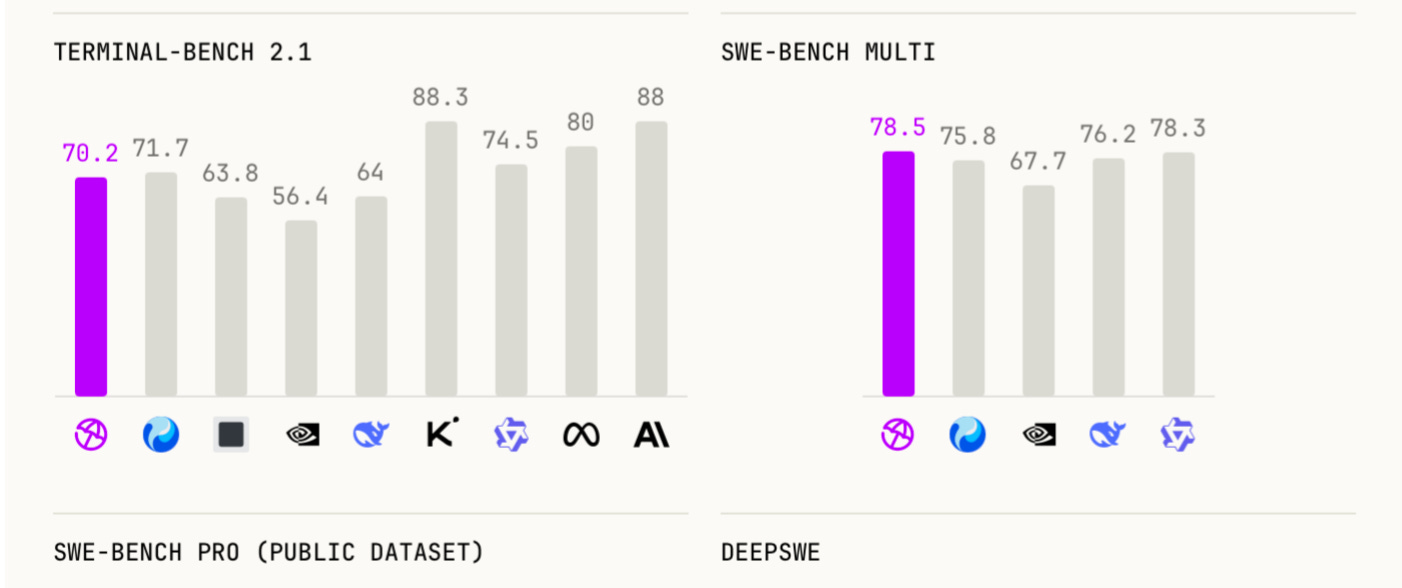
🏊 Poolside Laguna-S-2.1 traded blows with giants – A 120B model with 8B active parameters fits on a single RTX Pro 6000 in NVFP4 while matching models roughly ten times its size, beating DeepSeek V4 Pro and Inkling. Agentic engineering was reportedly a heavy focus during development.
🌐 Qwen3.8 arrived with 2.4T parameters – The model was announced as continuously evolving and heading to open weights, pitched as second only to Fable 5, with a Max preview already live on Alibaba platforms. Replies were dominated by requests for smaller sizes people can actually run.
🏛️ White House weighed Chinese model curbs – Restrictions were reported as under active consideration after K3 landed near frontier quality at a fraction of the price. Entity List designations, procurement rules, security advisories and liability requirements looked likelier than an outright ban, adding up to a de facto one without outlawing anything. Compute abroad was described as five to ten times cheaper.
🧭 Kimi K3 drew mixed field reports – Early hands on use found inference unstable over the weekend with frequent errors when wiring the model into agent stacks, though quality looked promising. As an architecture model it held up but ran slow enough to push at least one user back to GLM 5.2.
Community take: Alexandre Pereira (2501) hit lots of errors plugging their claw onto Moonshot inference but still found it promising, while Kemal Toprak Uçar swapped it in for GLM 5.2 as an architecture model and called it cool but quite slow, expecting to switch back.
📚 Stas Bekman added LLM training course – A lessons learned course on training large language models was added to an open engineering book, drawing on years of running large scale jobs and the failure modes that only show up at that size.
MLOps
📏 NVIDIA CUTLASS guide fixed GPU benchmarking – Timing the big matrix multiplications behind AI is easy to get wrong, so a set of rules went out: warm the machine up and discard those runs, feed fresh data each round so the chip is not just reading leftovers, and lock either clock speed or power. Even the numbers inside the matrices shift the result.
Robotic, World AI
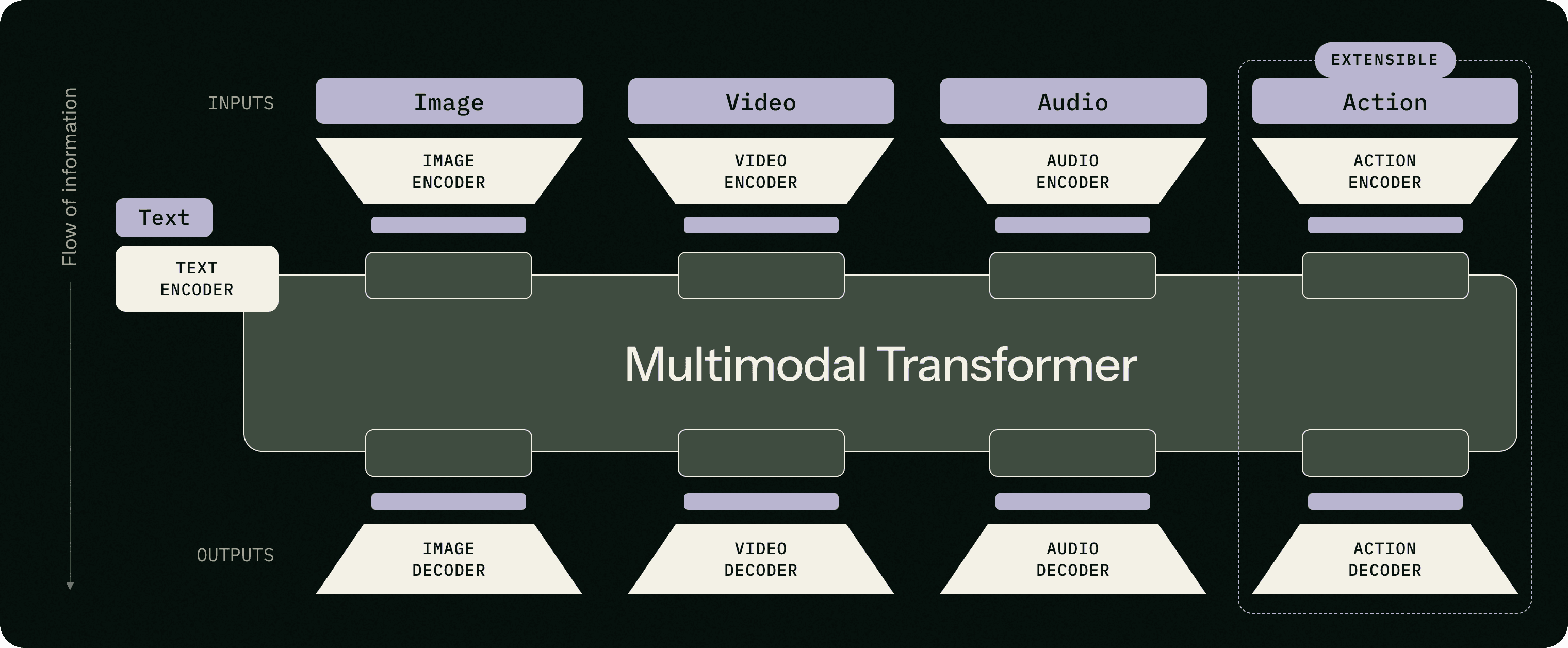
🎬 FLUX 3 unified video, audio, action – One model was trained on images, video and audio together, on the argument that each is a partial view of the same reality and that learning them jointly forces the model to get the physics right. Predicting a robot action then becomes one more view of that world. Announcement, FLUX-mimic
Video runs up to 20 seconds with sound generated natively in the same pass, and early head to head tests put it ahead of Kling v3 Pro, Seedance 2.0 and Gemini Omni Flash more often than not.
The same backbone drives robots through FLUX-mimic, built with mimic robotics and already tested on production tasks at Audi.
The rollout is staged, starting with video, then action prediction for selected partners, then image, with an open weight version of the backbone promised at the end.
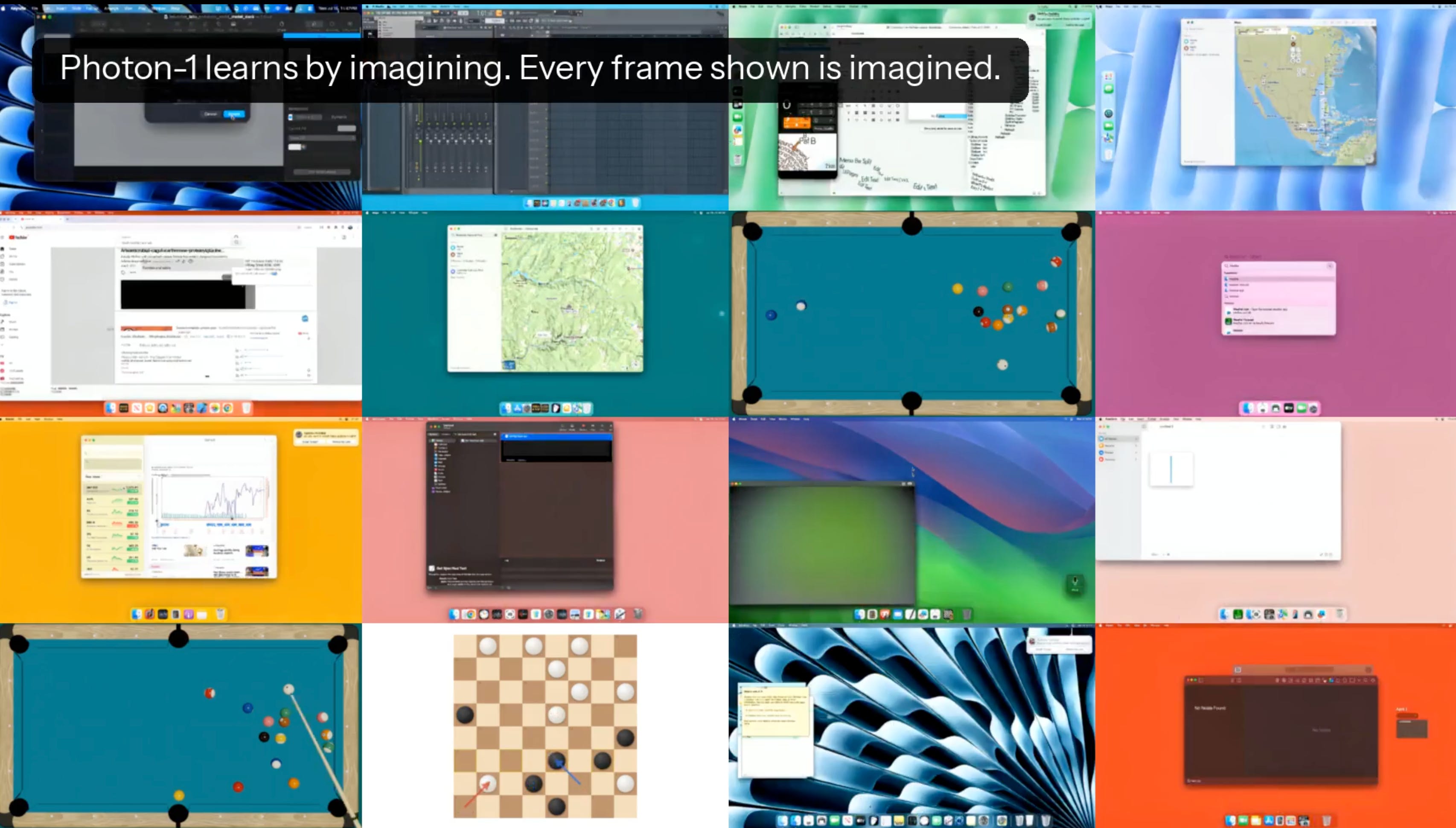
💡 Induction Labs Photon-1 learned computers – Pretraining on eighteen years of unlabeled screen recordings taught future state prediction in representation space, with a small finetune adding keyboard and mouse control. A vision encoder compressed each frame into 960 latent tokens at 2.2KB.
New member
🇺🇸 Akpeli Nordor – Techbio founder and operator, most recently CEO of Epigene Labs · Applied AI to precision oncology research. Former computational biology postdoc at Harvard Medical School and Institut Curie, now working out the next company while prototyping an AI chief of staff for biopharma executives and a drug mechanisms leaderboard. Special power: lighting a proper wood fire and making a real vinaigrette, and getting snobbish about both. 📍Boston, USA, often in Paris
Contributors This Week
Kevin Kuipers, Gabriel Olympie, Pierre Chapuis, Félix Raimundo, Amine Saboni, Akpeli Nordor, Kemal Toprak Uçar, Alexandre Pereira, Robert Hommes