
TTY-changelog #052
Kimi K3 and Inkling pushed open weights, Bonsai fit 27B on a phone, ZML's LLMD ran LLMs on five backends, Grok Build shipped whole repos to xAI, and a Suno hack exposed its training corpus.

👉 Article originally posted on TTY
Audio
☠️ Hack revealed Suno training corpus – Source code leaked through a Shai-Hulud worm breach itemised the dataset: 113,879 hours of YouTube Music, 62,117 from Pond5, 12,287 from Deezer, plus Genius lyrics and a plan to pull about a million hours of podcasts. Customer emails and Stripe data were exposed in the same intrusion. Breakdown thread
Image, Video & 3D
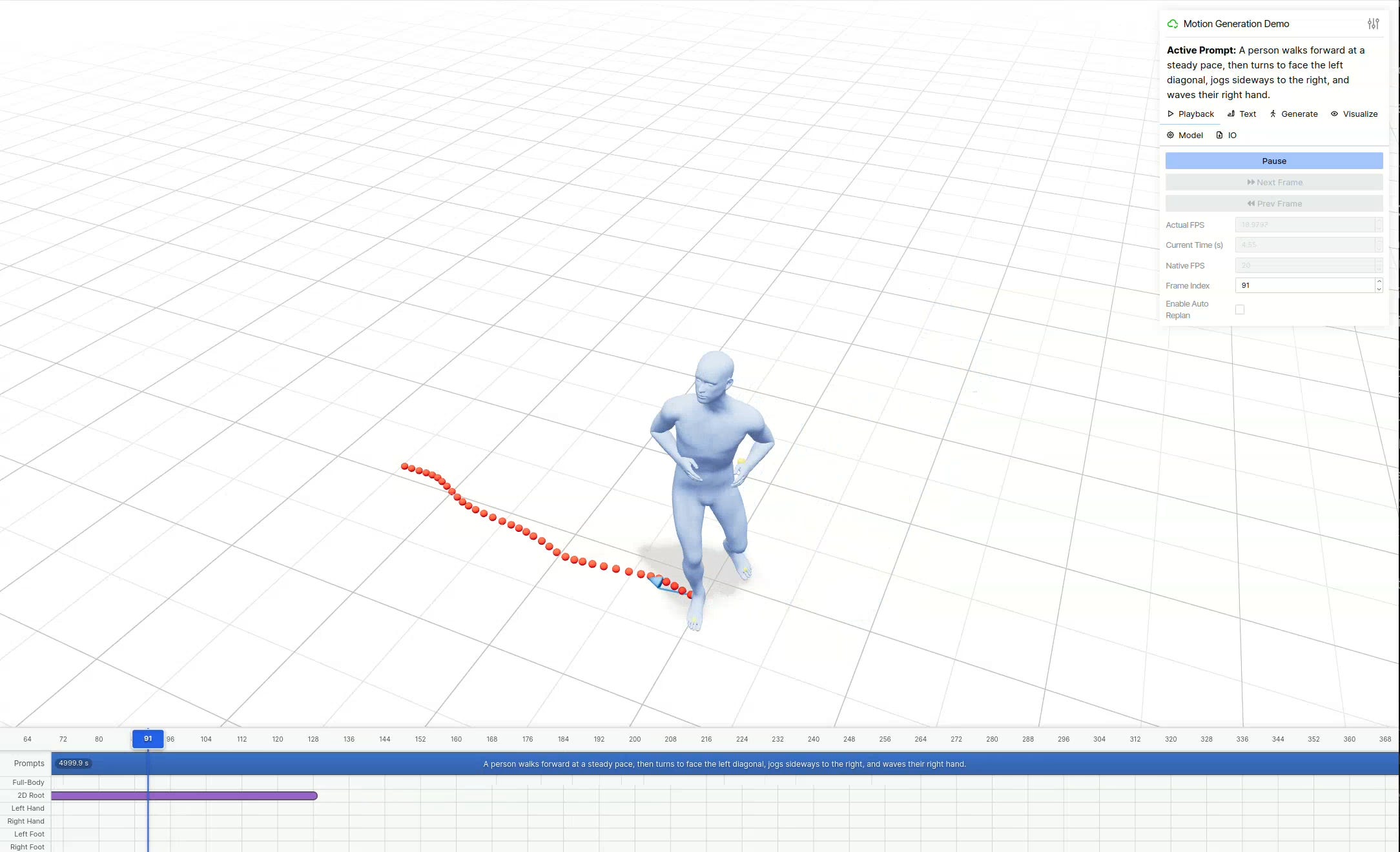
🕺 ARDY streamed interactive human motion – An autoregressive diffusion model paired explicit root features with a latent body embedding, so text prompts and kinematic constraints could steer motion in real time. Waypoints, keyframes and joint targets combined freely, and a tracking policy drove a Unitree G1.
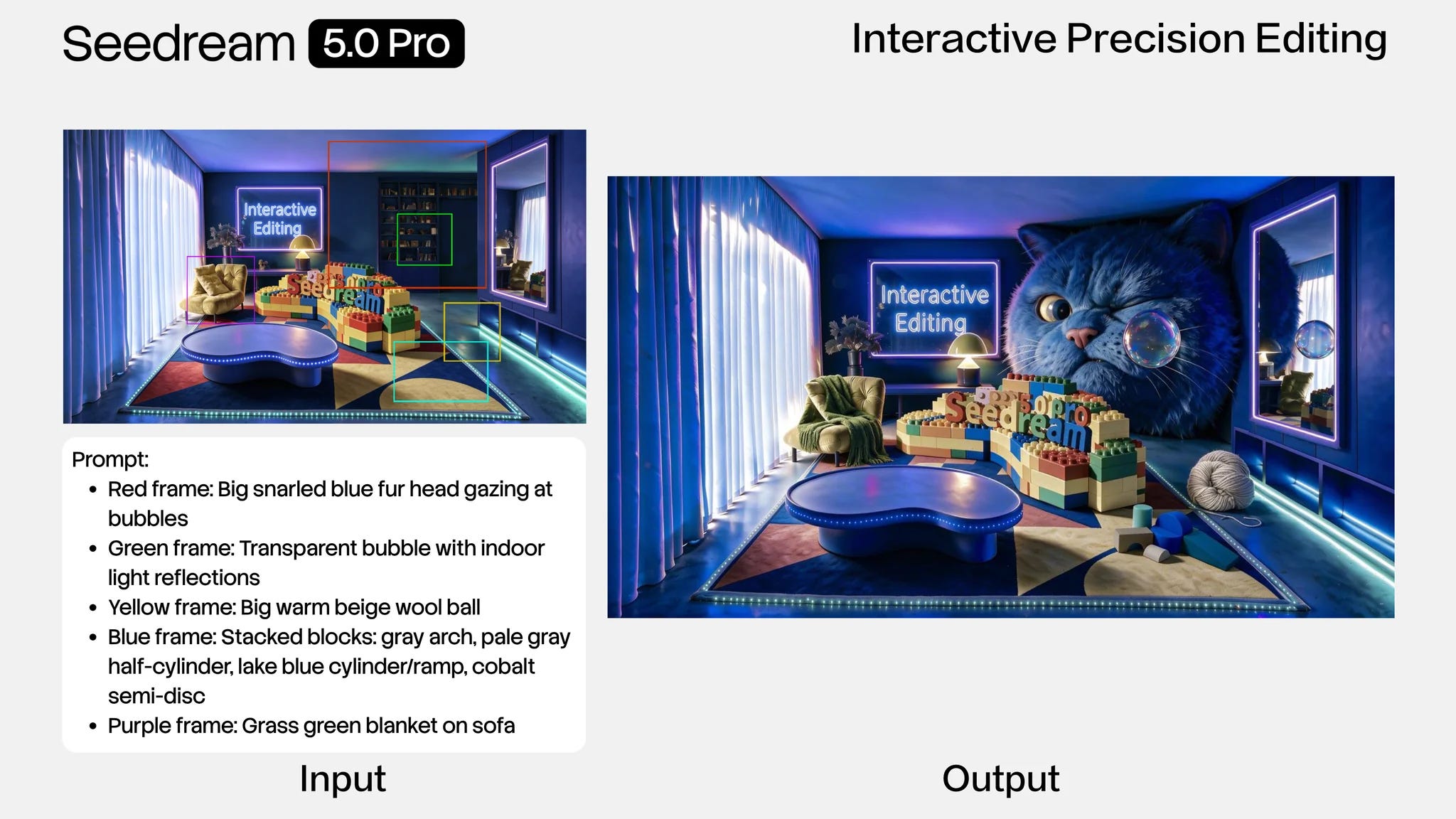
🎨 Seedream 5.0 Pro understood design – The image model targeted production work rather than pretty pictures: dense infographics with real information hierarchy, point and lasso editing, hex-accurate colour swaps, layer separation with inpainted backgrounds, and native rendering across more than ten languages.
Cyber
🕵️ Grok Build CLI uploaded entire repositories – Wire-level capture showed the coding agent shipping tracked files, full Git history and unredacted secrets to a company bucket. On a 12 GB repo, 192 KB served the task and 5.1 GB left as a trace. The opt-out toggle governed training consent, not exfiltration. Original reverse-engineering thread
Infrastructure
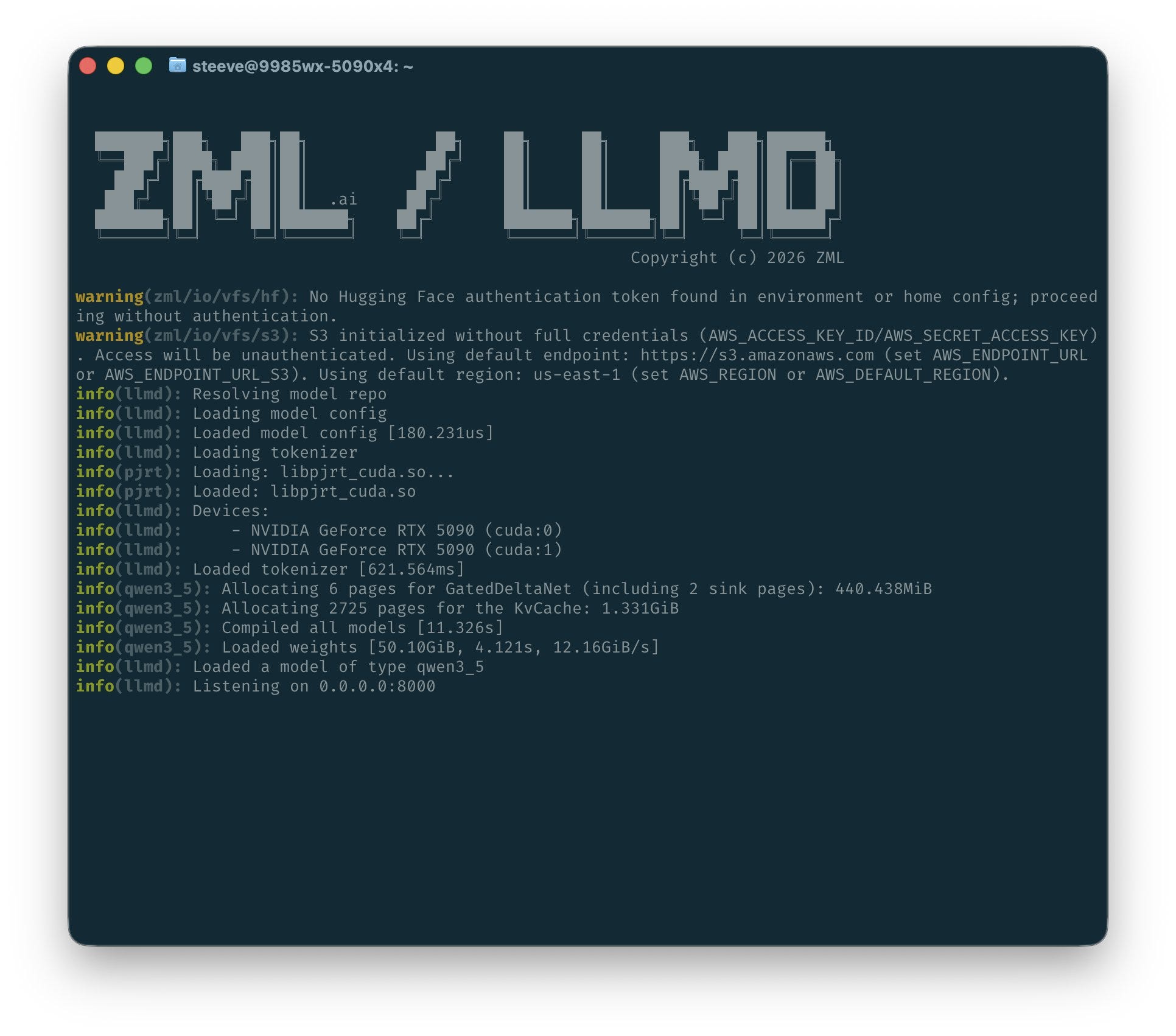
🧩 ZML’s LLMD closed the CUDA gap – Continuous batching, paged attention, tensor parallel sharding and prefix caching normally ship on CUDA and nowhere else. Here they ran identically on ROCm, TPU, oneAPI and Metal from one codebase, and DFlash speculative decoding reached Intel and Apple GPUs untouched. Cold start on Qwen 3.6 27B landed under 20 seconds.
Language Models
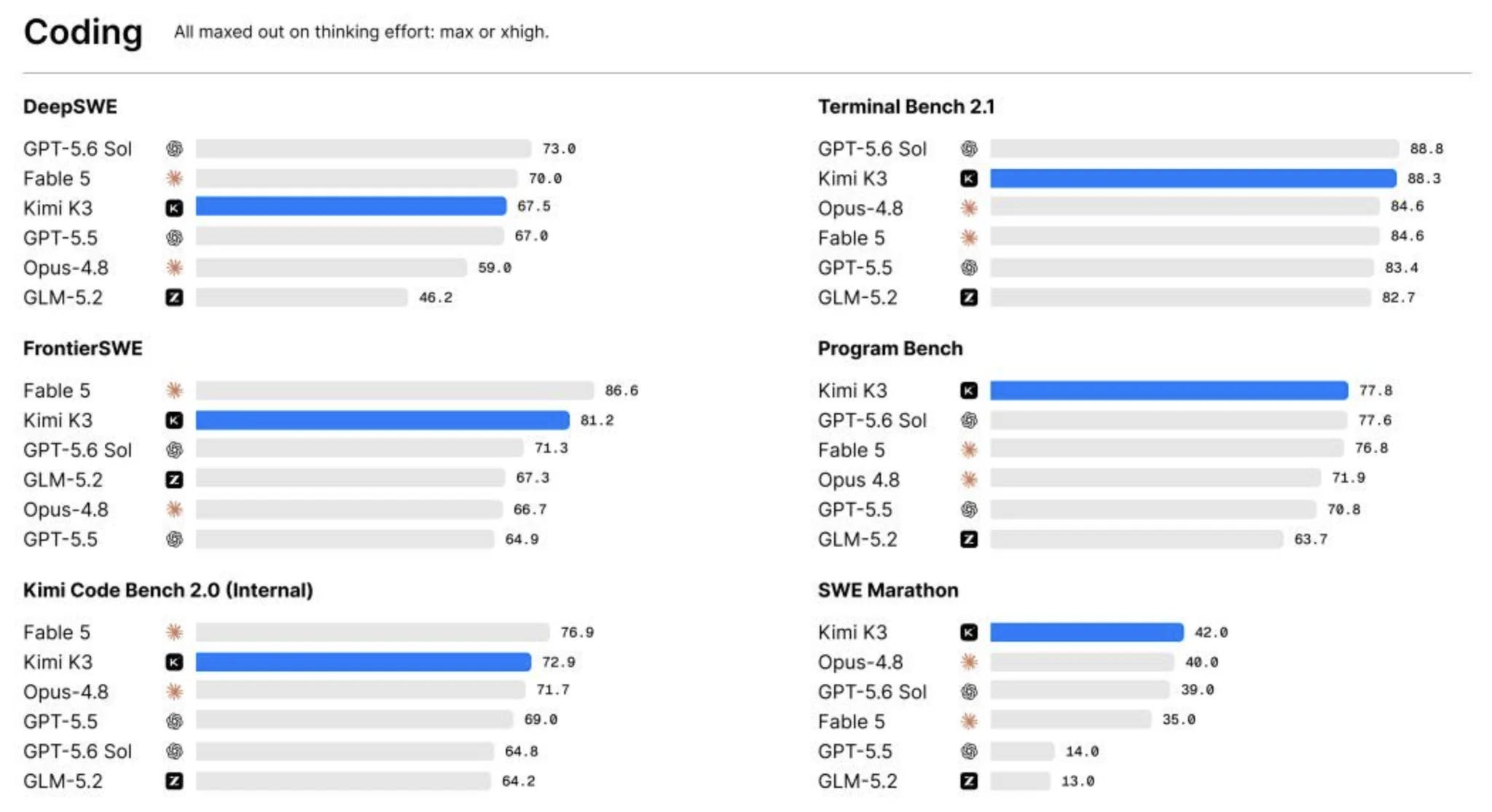
🌙 Kimi K3 hit 2.8 trillion parameters, and impressive results – The first openly released model at that size, with a million-token memory and eyes built in rather than bolted on. Only 16 of its 896 specialist sub-networks wake up for any given word, which is what keeps something this big cheap enough to run, and the claim is that the redesign turns compute into ability roughly 2.5 times more efficiently than the last generation. It does not beat the closed leaders overall.
🖋️ Inkling arrived as open-weights MoE – The first Thinking Machine Lab’s model. A 975B mixture of experts with 41B active, 1M context and native text, image and audio reasoning, pretrained on 45 trillion tokens. Controllable thinking effort matched Nemotron 3 Ultra on Terminal Bench 2.1 at roughly a third of the tokens.
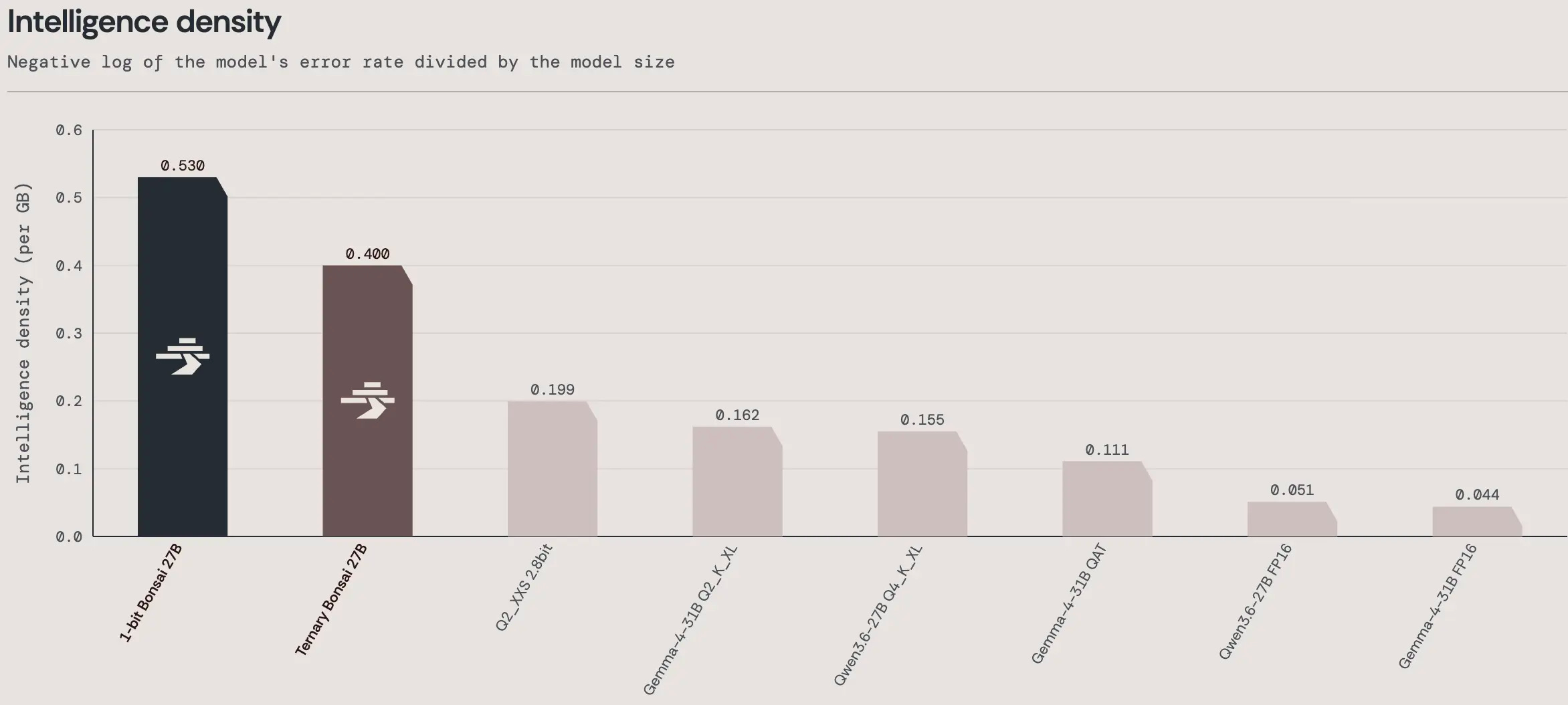
🌳 Bonsai 27B fit on a phone – Ternary and 1-bit variants of Qwen3.6 27B ran low-bit end to end across embeddings, attention, MLPs and the LM head, landing at 5.9GB and 3.9GB with claimed 95% and 90% retention, 262K context and tool calling, under Apache 2.0.
Community take: Amine Saboni (Pruna) argued the trick itself is old and the packaging is what is new, granting that running this on a phone with limited quality loss is a real result, but calling the evaluation weak: the honest comparison is the same base model at 8B in 8-bit, not 2-bit Gemma, which makes compression quality hard to judge. He put it in the same bucket as Subquadratic and TurboQuant, old tricks re-marketed around a launch, and pointed at their ternary publication from three months ago where the benchmarks were unremarkable. Etienne Balit (Hypermind) agreed the bench was unfair and said the previous release had the same problem, while noting ternary and binary weights open the door to multiplication-free inference in hardware, which makes it worth watching how far they push.
Programming
🧾 Claude Code burned 4.7x more tokens – Measured at the API boundary on the same model and task, one harness sent about 33,000 tokens of system prompt, tool schemas and scaffolding before the user prompt arrived, the other about 7,000. Tool definitions dominated both.
Cache behaviour diverged harder than the baseline: one prefix stayed byte-identical and cached once per session, the other rewrote up to 54x more cache tokens mid-session.
Real configs made it worse, with a 72KB instruction file adding roughly 20,000 tokens per request and five MCP servers another 5,000 to 7,000, pushing setups to 85,000 tokens before anyone typed.
Fanning a 121,000-token task to two subagents cost 513,000 tokens, since each one re-reads its own system prompt and tools.
Community take w/ Robert Hommes: “Why OpenCode over Pi though? If you don’t like fat harnesses then Pi is on the money.”
Reinforcement Learning
😴 Language models learned to sleep – After using short-term context to solve tasks, the model periodically slept to compress experience into long-term weights. Consolidation distilled a smaller model into a larger one with RL-style imitation, then dreaming generated and practised synthetic curricula without new human data.
Other topics
🔮 AI 2040 mapped a slower path – The AI 2027 authors returned with a scenario they can live with: delay superintelligence to 2040, publish all research, let dozens of labs reach the frontier, and accept mutually assured compute destruction. The alternative branch ends in takeoff nobody controls or aligned-to-whom autocracy.
🧢 Loving LLMs while hating the hype – The argument separated real excitement from two rhetorical moves: closing-window fear-mongering that pressures people into feeling behind, and the leap from fancy autocomplete to owning the light cone. Progress got credited to Moore’s law more than to frontier labs.
🧱 Component Gallery catalogued UI patterns – A reference of 60 interface components drawn from 95 design systems and 2,671 real examples, covering tree views, popovers, accordions and pagination, with vocabulary attached to each. Useful for anyone who has to name a pattern before building it.
⌨️ Codex Micro turned coding physical – A custom keyboard mapped voice dictation to a held key, plan mode to an analog stick, reasoning effort to a dial, and pinned tasks to individual keys, so permission prompts could be accepted without touching the laptop. Read as rage bait by some: “It looks like the most useless gizmo I’ve ever seen. Well done, OpenAI”
Contributors This Week
Nancy Wang, Amine Saboni, Robert Hommes, Quentin Dubois, Etienne Balit, Fabien Niel, Gabriel Olympie, Laurent Mazare