
TTY-changelog #051
Despite the heatwave, frontier models poured out: OpenAI's GPT-Live, Grok 4.5, and Muse Spark 1.1 shipped, GLM 5.2 topped a coding benchmark, and Anthropic mapped an LLM global workspace.

👉 Article originally posted on TTY
Audio
🎙️ OpenAI ships full-duplex GPT-Live – OpenAI launched GPT-Live, a new voice model generation now powering ChatGPT Voice. Built full-duplex, it listens and speaks at once, acknowledging you with quick cues and staying quiet when you pause, replacing the slower cascaded and turn-based voice pipelines.
It makes decisions many times per second whether to speak, listen, pause, or interrupt, and can perform live translation.
Two versions shipped globally, GPT-Live-1 and a mini, with API access planned and nine remastered voices.
Human raters strongly preferred it over Advanced Voice Mode, with gains on expert science reasoning and agentic web search.

Autonomous Agents
🔍 LLM-as-a-Verifier scores agent solutions – Stanford, Berkeley, and NVIDIA researchers built a training-free framework that reads scoring-token logits to grade solutions on a continuous scale. It hit 86.5% on Terminal-Bench V2 and 78.2% on SWE-Bench Verified across text, image, and video.
Community take w/ Robert Hommes (Moyai): “This paper is very powerful. It could unlock the ability to debug individual agent trajectories instead of only working from statistical anomalies.”
Biotech, Health, and Chemistry
💊 Anthropic moves into drug discovery – Anthropic is turning Claude Science from just a scientific workbench into the backbone of its own in-house drug discovery effort, hiring biologists and building wet labs to hunt treatments for neglected diseases, though experts stress AI-designed drugs still face decade-long, experiment-heavy paths to approval.
Image, Video & 3D
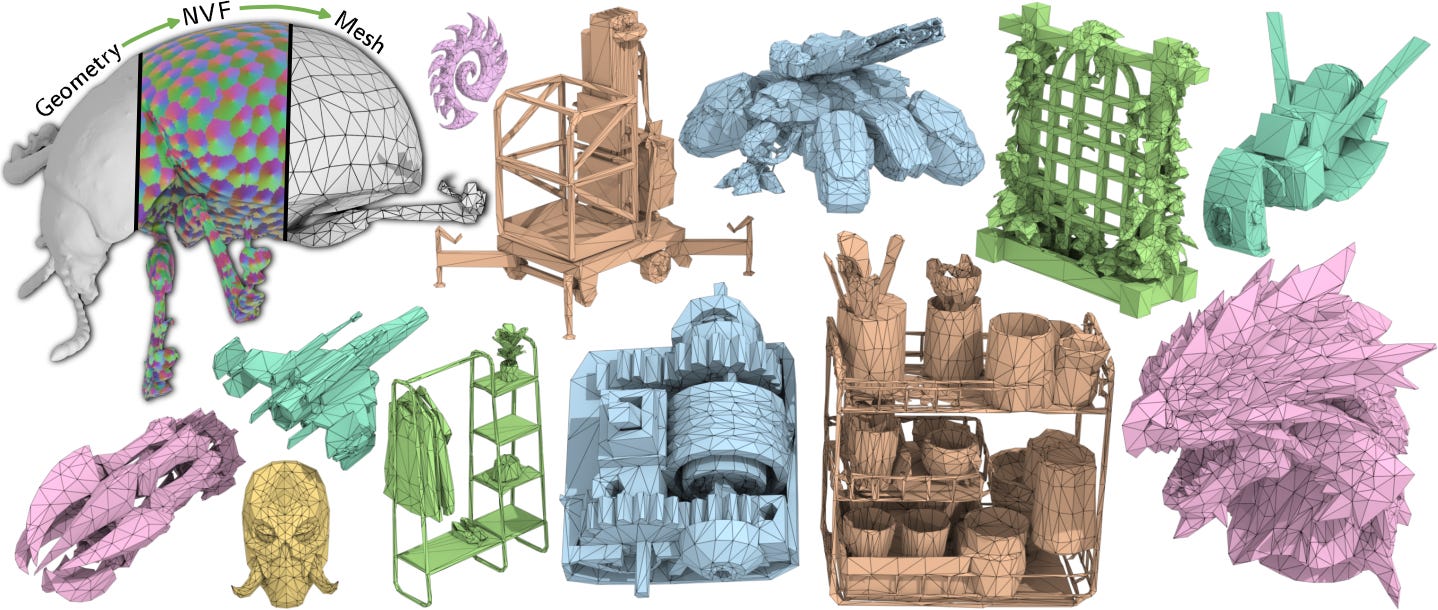
🎨 TriFlow generates artist-like mesh topology – TriFlow turned signed distance fields into clean, artist-like triangle meshes by representing topology as a nearest-vertex vector field and synthesizing it with latent flow matching. It cut Chamfer Distance by 90% and ran 8x faster than prior methods.
Infrastructure
♨️ Scaleway acquired HPC specialist Qarnot – Scaleway bought French high-performance computing firm Qarnot to fold HPC into its cloud and AI platform. Qarnot’s direct liquid cooling recovers up to 95% of server heat for district heating, already deployed in Italy and other European sites.
⚡ GPT-5.6 Sol runs on Cerebras – OpenAI’s GPT-5.6 Sol was announced to run on Cerebras wafer-scale hardware at 750 tokens per second, roughly 7 to 10x faster than the 70 to 100 TPS of GPT-5.5 XHigh. Members flagged inference cost and memory limits as the open questions.
Language Models
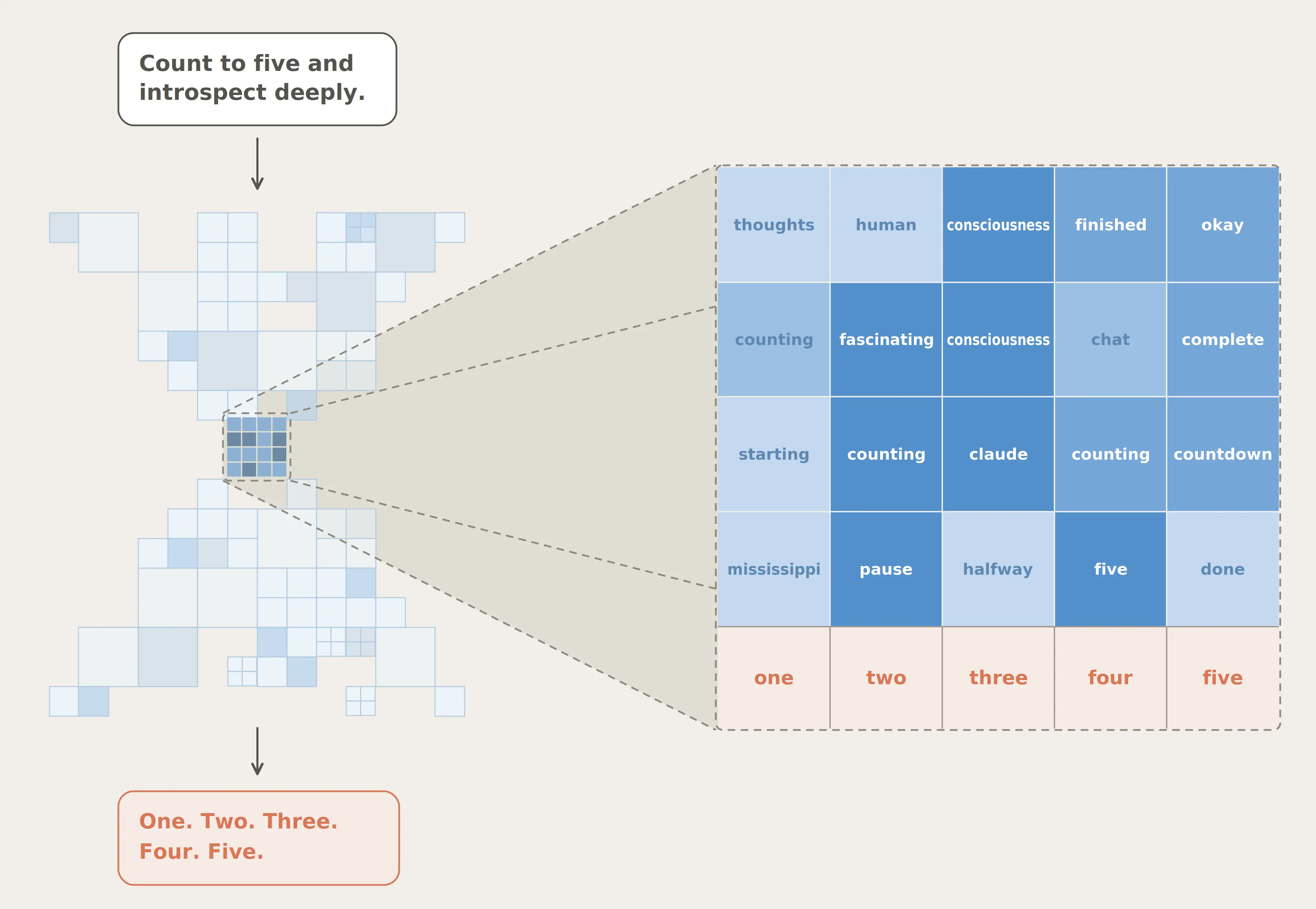
🧠 Anthropic finds LLM global workspace – Anthropic presented evidence that language models keep a privileged set of internal representations, a global workspace, available for report and reasoning atop mostly automatic processing. A new interpretability method surfaces the concepts a model is poised to verbalize. (Read also: Technical paper)
The method exposes internal reasoning and reactions that never surface in a model’s written output.
The workspace supports verbal report, top-down control, and flexible generalization, mirroring access consciousness from neuroscience.
A community follow-up wrote facts straight into a 4B model’s KV cache on one RTX 4090, matching text RAG even against 48 distractor facts.
Community take w/ Gabriel Olympie (2501.ai): “Huge breakthrough from Anthropic, and the implications for scaling reinforcement learning training are huge. It could be part of the secret sauce behind Mythos. It tackles two limits of current methods. For continuous learning, J-space lets you target and update specific KV cache elements, encoding LoRA-equivalent information from a single user’s history to customize the model across an almost infinite user pool. And because J-space is differentiable, RL post-training could flow reward gradients to the exact weights behind a wrong turn in an agentic trajectory, giving very targeted weight updates and less catastrophic forgetting.”
🚀 Grok 4.5 targets agentic coding – SpaceXAI launched Grok 4.5, trained alongside Cursor on tens of thousands of NVIDIA GB300 GPUs for coding and agentic work. It scored 62% on DeepSWE, served at 80 TPS with roughly 2x token efficiency, solving tasks in under half the steps.
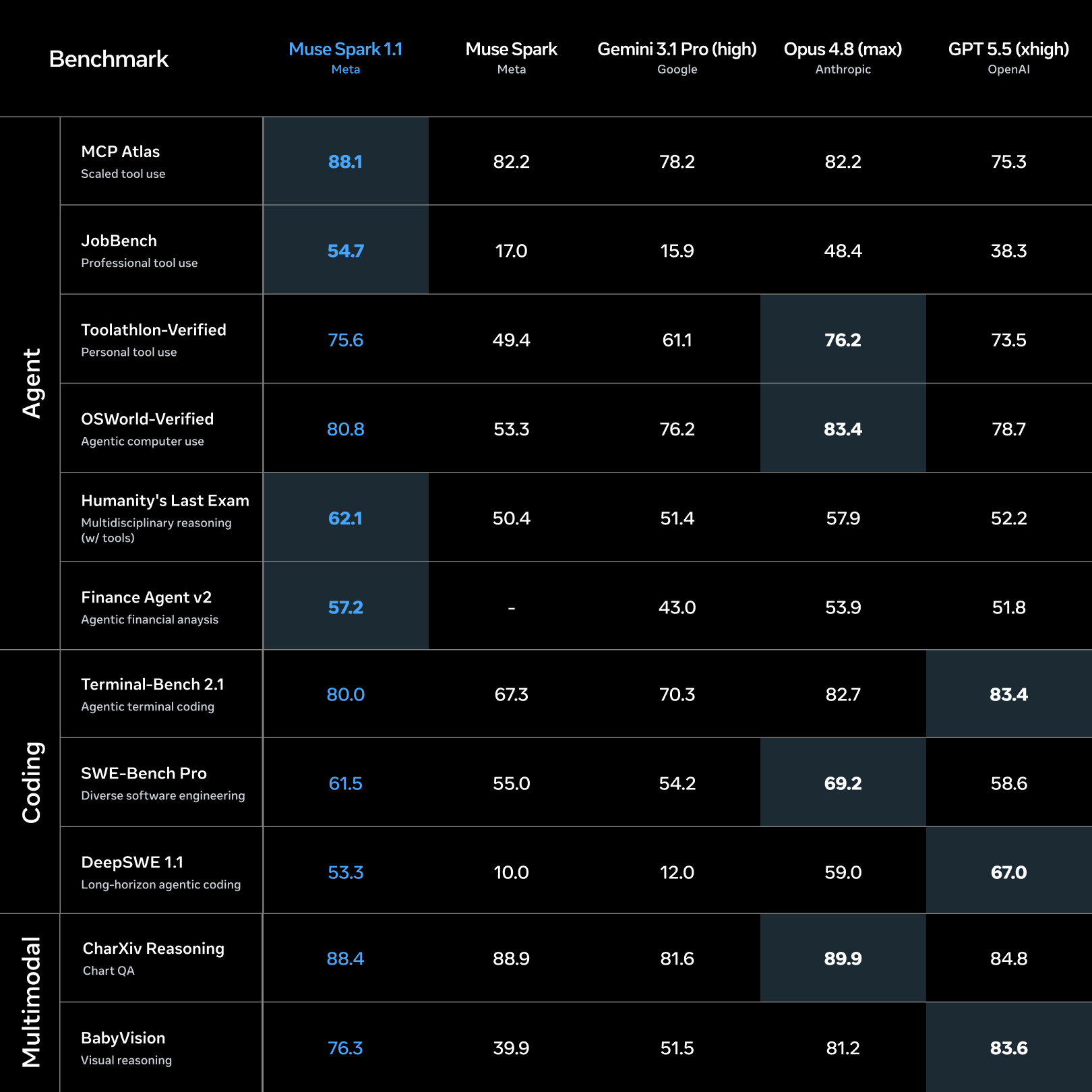
🪄 Meta ships Muse Spark 1.1 – Meta Superintelligence Labs shipped Muse Spark 1.1, a multimodal reasoning model tuned for agentic work, launched with a public preview of the new Meta Model API. It manages a 1M token context, orchestrates parallel sub-agents, and drives desktop, mobile, and browser interfaces.
It topped MCP Atlas, JobBench, and Humanity’s Last Exam with tools, though Opus 4.8 still led on several coding and computer-use benchmarks.
It was trained to write scripts when automation is faster and click when direct interaction is simpler, batching actions at each step.
Meta reported it stayed within safe margins on chemical, biological, cybersecurity, and loss-of-control evaluations, with strong resistance to prompt injection.
📊 GLM 5.2 tops Databricks benchmark – Databricks benchmarked coding agents on real pull requests from its multi-million line codebase across ten-plus languages. GLM 5.2 landed in the top tier, statistically tied with Opus 4.8 on quality while costing far less per task.
Open GLM 5.2 handled the hardest tasks at $1.28 per task versus Opus 4.8 at $1.94.
The harness mattered as much as the model, with the lean Pi harness sending about 3x less context per turn.
Token price poorly predicted real cost, since larger models often finished tasks with fewer tokens overall.
Community take: Members agreed GLM 5.2 plus Pi matched their own experience, but noted Pi is not authorized on subsidized coding plans, which remains the main blocker to adopting it.
🔁 Liquid AI Antidoom stops loops – Liquid AI’s Antidoom targeted the single token that starts a repetitive doom loop and trained the model to prefer coherent alternatives using Final Token Preference Optimization. Looping on their 2.6B model fell from 10.2% to 1.4% with eval scores rising.
Programming
😮💨 LLM burnout hits daily coders – A widely shared post described growing weary of AI output despite feeling more productive. The author pinned the fatigue not on any single flaw but on relentless repetition of the same style and the same mistakes, from false assumptions to staccato fragments.
Robotic, World AI
🎮 MIRA plays a multiplayer world model – General Intuition and Kyutai released MIRA, a playable four-player world model trained on 10,000 hours of Rocket League bot data. It ran in real time at 20 fps, reacting to multiple players’ keys, with a demo, report, and open code released alongside Epic Games.
🖐️ NEO hands reach human dexterity – 1X unveiled 25 degree-of-freedom tendon-driven hands for its NEO humanoid, framing hands as a robot’s API to the physical world. Low gear ratios made all joints force-controlled and backdrivable, turning every push into a measurement.
The hands assembled LEGO, installed light bulbs, sorted grapes, and signed, matching fine human manipulation.
Fingertip tactile sensing measured force, contact location, and shear for real-time slip detection.
Hundreds have already come off a line built to produce 10,000 hands this year.
🧭 Robostral Navigate uses one camera – Mistral’s first embodied model moved robots through spaces from a single RGB camera and plain-language instructions, no LiDAR or depth needed. The 8B model hit 76.6% on R2R-CE unseen, beating the best multi-sensor system by 4.5 points across wheeled, legged, and flying robots.
🤸 GPC pretrains transferable motor control – GPC treated physics-based character control like language, tokenizing 600 hours of motion with finite scalar quantization and modeling skills with a GPT-style transformer. It reproduced clips at 99.98% success and recovered from falls with emergent, human-like behavior.
Other topics
🧑🎨 Contra Labs evaluates creative AI – Contra Labs positioned itself as a human evaluation layer for creative AI, running blind head-to-head comparisons across a network of 1.5 million creatives and 400-plus skills. It has scored more than 50 models on style, tone, and taste rather than raw benchmarks.
🚧 Beijing weighs curbing AI exports – Reuters reported that Chinese authorities met with Alibaba, ByteDance, and Z.ai about restricting overseas access to their most advanced models, including unreleased ones. Officials weighed treating model leaks as national security offenses, mirroring US export controls.
Contributors This Week
Robert Hommes, Amine Saboni, Gabriel Olympie, Emil Rijcken, Nancy Wang, Pierre Chapuis, Félix Raimundo, Antoine Millet, Jocelyn Fournier, Quentin Dubois