
TTY-changelog #047
Claude Fable 5 launched then walked back its hidden safeguards, single-cell foundation models showed no scaling laws sparking a biotech rant, and new 3D and world models shipped.

👉 Originally posted on TTY
Community Asks
📊 Cloud and compute usage survey – A ten-question survey on cloud and compute usage went out to the community, with results promised back in aggregate only and individual answers kept confidential.
Autonomous Agents
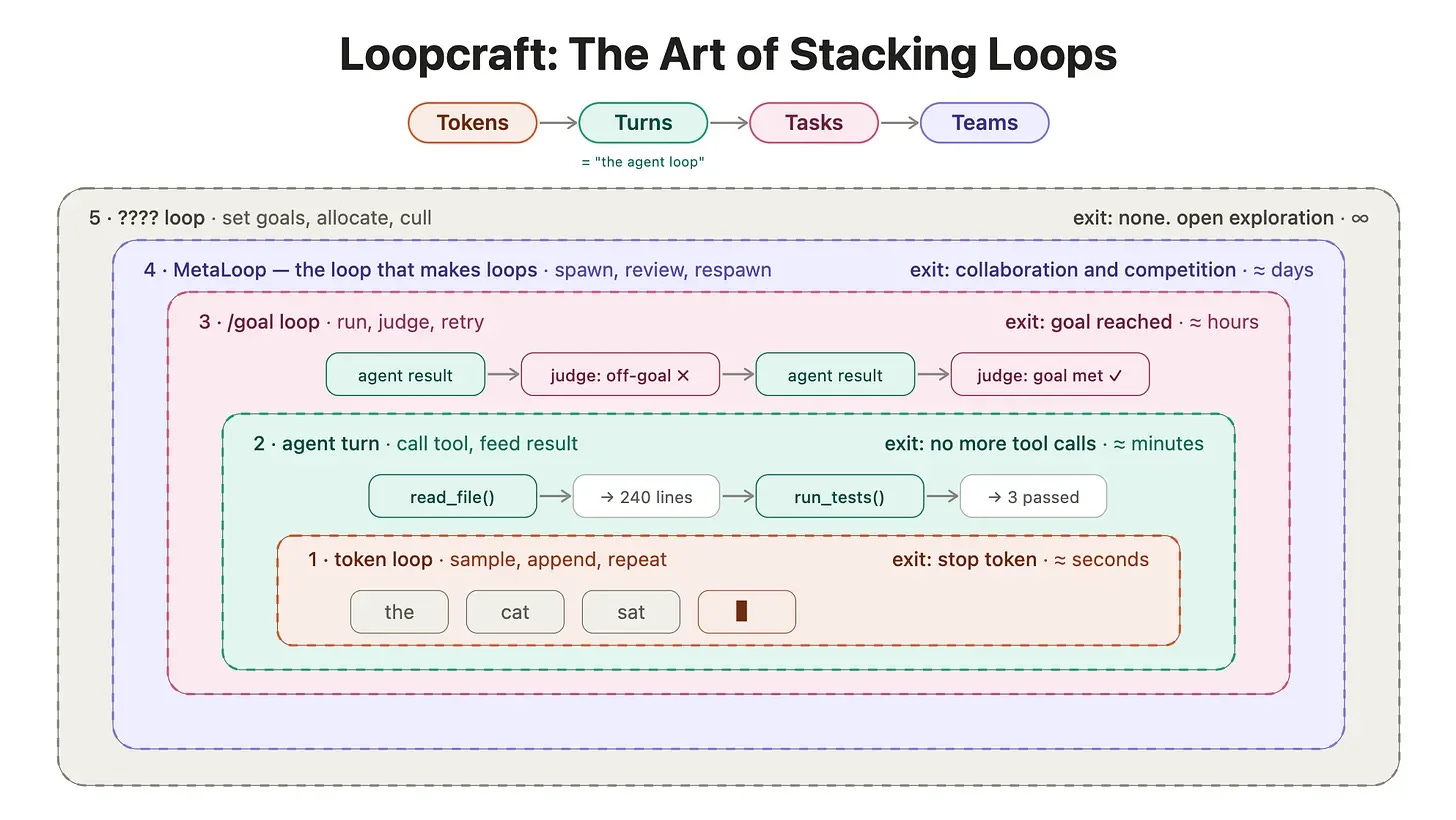
🔁 Loopcraft and stacking agentic loops – An AINews roundup elevated loop discourse from prominent builders: stop prompting agents and instead design loops that prompt them. The framing cast loopcraft, stacking and orchestrating autonomous loops to remove the human bottleneck, as the emerging craft.
Community take: Some noted the loop-stacking idea echoes long-standing concurrency models like Erlang, whose isolated lightweight processes communicating only through message passing have framed similar orchestration ideas for decades.
🤖 Tamag0 multi-agent platform beta – Jocelyn Fournier from the community opened a private beta for a platform running teams of specialized AI agents on an existing Claude Code plan, with one-click swaps to Ollama or OpenAI-compatible backends.
Biotech, Health, and Chemistry
🧬 Single-cell scaling laws questioned – A study pretrained 400 single-cell foundation models across 6,400 experiments on a 22.2 million cell corpus and found performance plateaued using a fraction of current data, with no clear scaling laws unlike large language models. See the open preprint, the original scaling laws paper, and an earlier tuning benchmark.
Simple PCA and scVI baselines matched or beat transformer foundation models on perturbation, classification, and embedding tasks.
Roughly one percent of the pretraining corpus was enough to reach saturating downstream performance.
The work imported scaling assumptions from language and vision without explaining why single-cell data behaved differently.
Community take w/ Félix Raimundo: “I do not see why people expect scaling laws to run to infinity. It is entirely reasonable for them to saturate early.”
Community take: The paper drew sharp criticism for restating long-known results that PCA and scVI rival transformer foundation models, for offering little mechanistic explanation, and for not engaging prior work on the topic.
🧫 NewLimit 2026 progress update – A recorded 2026 progress update covered partial reprogramming research, with AI systems reported to double the rate of discovery, an expansion from two to three therapeutic programs, and plans to bring reprogramming medicines into human trials.
Image, Video & 3D
👁️ OpenCV 5 modernizes the library – A major OpenCV release rebuilt the library on modern C++ with an overhauled DNN engine, lifting ONNX operator coverage past eighty percent and adding dynamic shapes, control flow, attention fusions, stronger 3D vision, and cleaner Python integration.
🧊 TokenGS decouples Gaussians from pixels – A feed-forward framework reconstructed 3D Gaussian Splatting scenes from posed images using learnable tokens in an encoder-decoder transformer, unbinding Gaussian count and placement from image resolution for better geometry across static and dynamic scenes.
🤸 Markerless multi-person motion capture – A markerless motion-capture pipeline recovered SMPL-X parameters from multi-view video of two-person interactions, using a transformer that predicts dense 2D surface landmarks with uncertainty and contact, trained on a large synthetic dataset and named a CVPR oral award candidate.
It tracks hundreds of points across the body and holds up even on unusual, twisted poses.
It learned from millions of synthetic images, which gave perfect labels real footage cannot.
It aligns the same points across camera angles, dropping the hand-tuned assumptions older methods needed.
🖼️ TripoSplat turns images into splats – An interactive Hugging Face Space turned a single uploaded image into a 3D Gaussian-splat reconstruction viewable in the browser, with adjustable sampling settings and exportable point-cloud files, running on free ZERO GPU hardware.
🗼 Agent built 3D Paris gallery – Mishig Davaadorj from Hugging Face had a coding agent assemble a cinematic 3D gallery of Paris monuments by chaining two Hugging Face Spaces for image generation and Gaussian splatting, calling each through its agents.md file without anyone opening an image or 3D tool directly.
Language Models
🚀 Claude Fable 5 launched – Anthropic released Claude Fable 5, a Mythos-class model made safe for general use and described as state-of-the-art across software engineering, knowledge work, vision, and scientific research, with conservative safeguards that route flagged queries to Opus 4.8.
Community take w/ Gabriel Olympie: “Slightly underwhelming hype-wise, but a good model. I would give it a 20 to 25 percent boost in raw intelligence over Opus, and it reaches conclusions more efficiently. The downside is it stays narrow, lacks the agency to act on what it finds, repeats Opus blind spots like overengineering and weak synthesis, and has a subtle but impactful sycophancy that flatters your ego.”
Community take w/ Ihab Bendidi: “Fable 5 is unusable. If my repo just has some bio-related terminology, the model switches to Opus. I tried tricking it by replacing the objectives with different domain terms, and it works for a moment until it infers on its own that the losses might be bio-related. That happened with a simple Poisson loss, which is not even necessarily bio.”
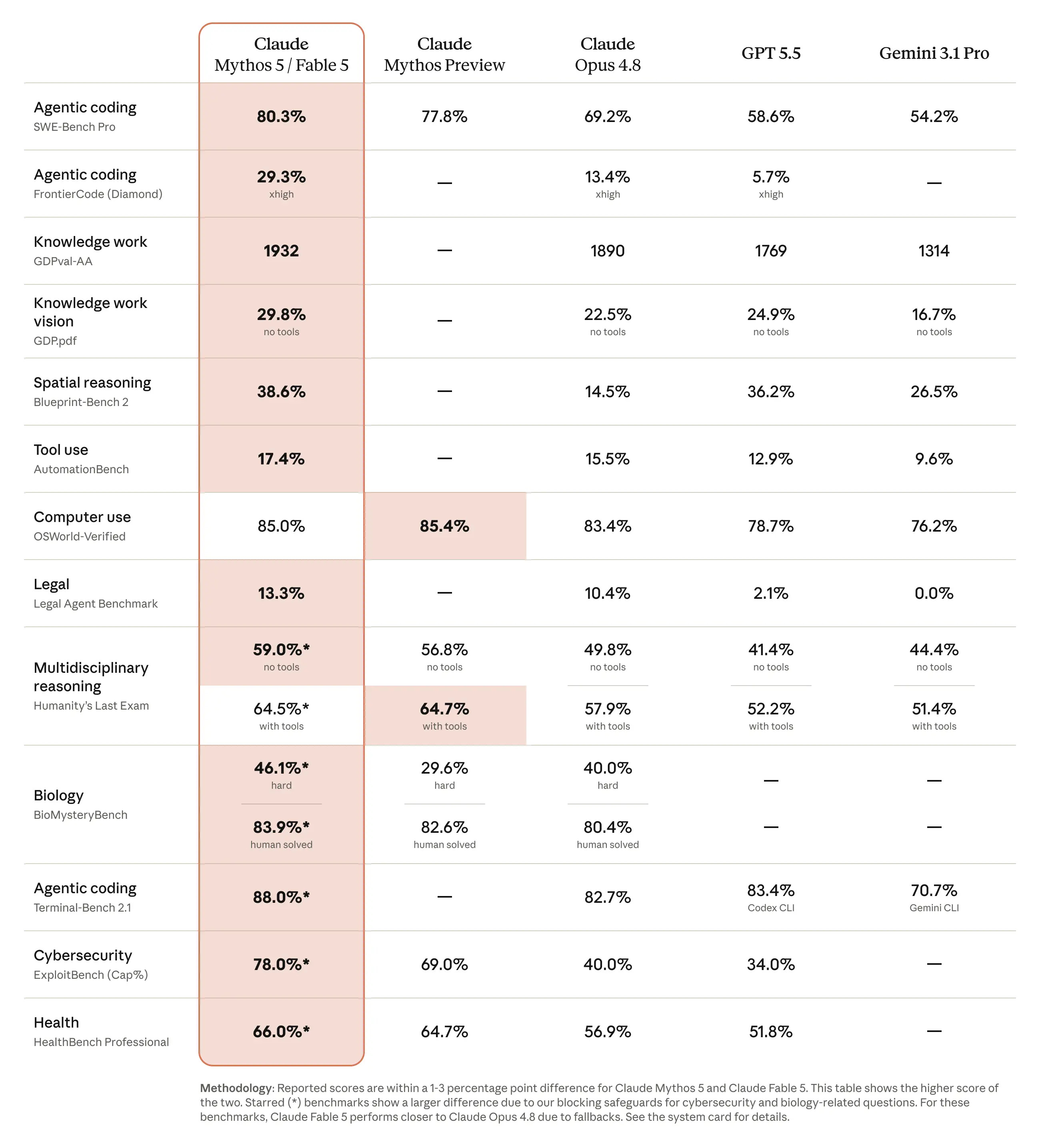
🔓 Anthropic made Fable safeguards visible – After an outcry over a buried policy that let Claude Fable quietly limit help on frontier LLM development without telling users, Anthropic reversed course to make flagged requests visibly fall back to Opus 4.8 and apologized for the wrong tradeoff.
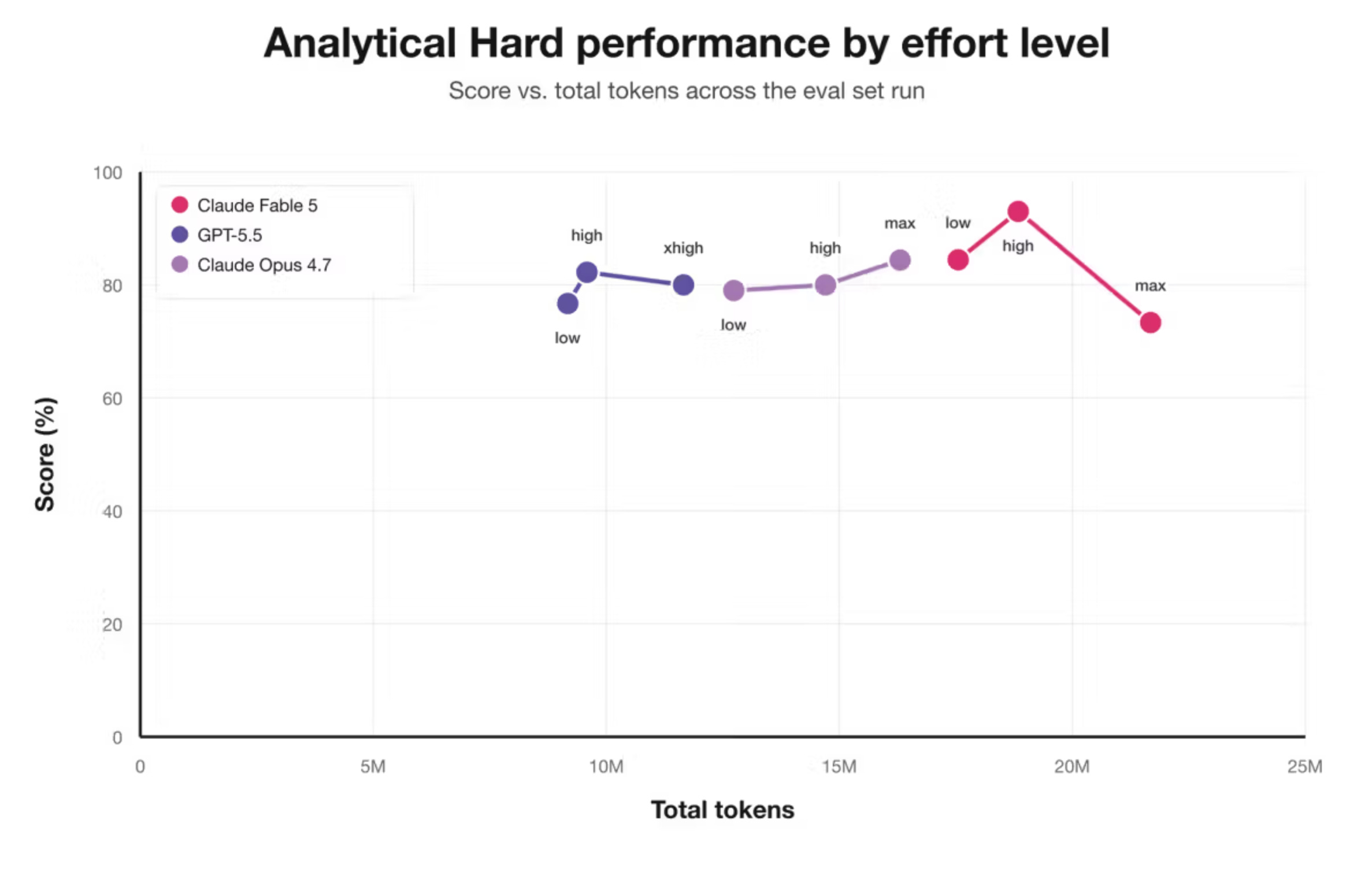
📊 Hex built new Fable evals – A data analytics company called Claude Fable 5 the first model since Opus 4.5 to meaningfully improve at analytical reasoning, prompting harder evals, while noting that maximum reasoning effort sometimes caused overthinking and worse results on simple tasks.
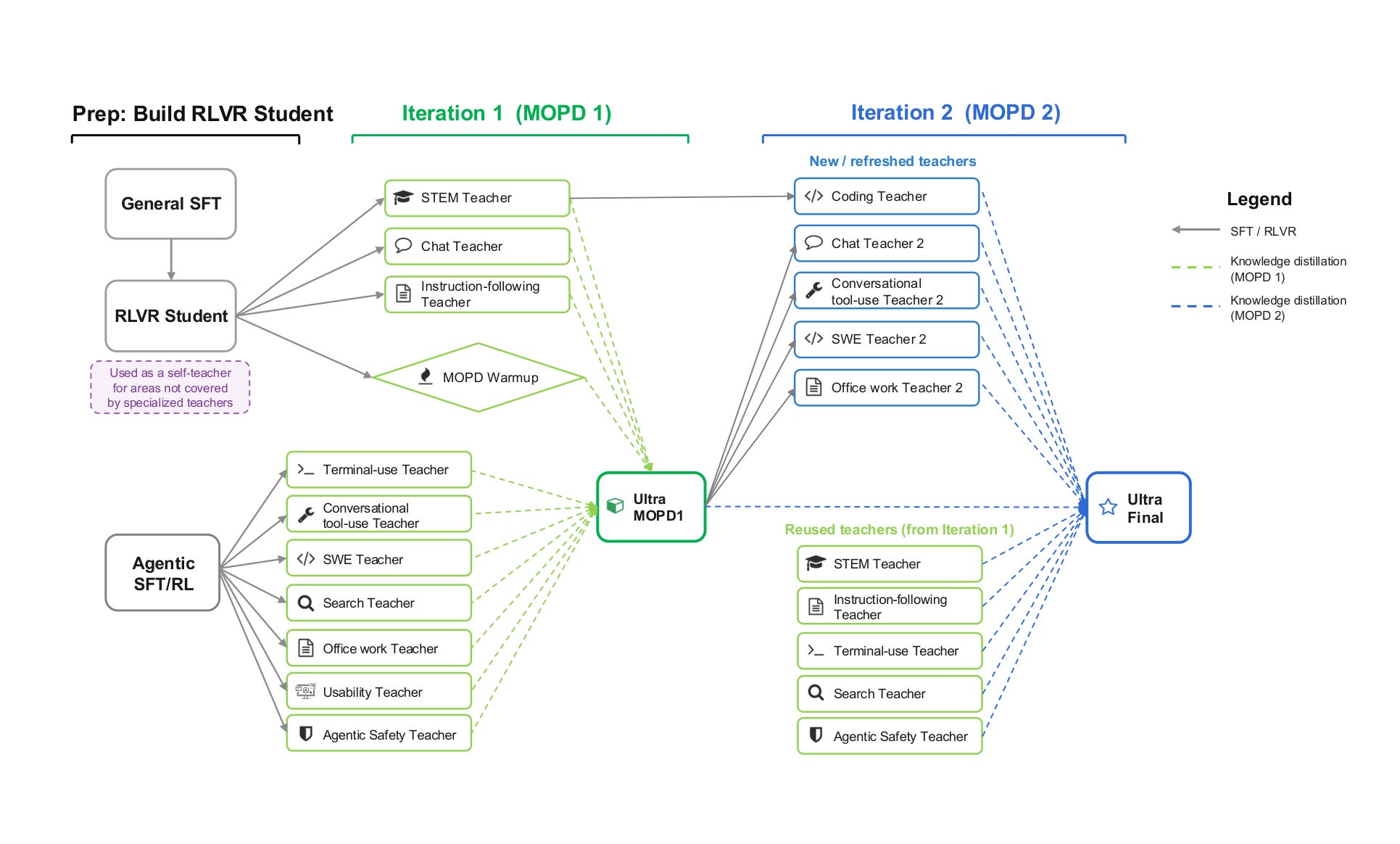
🧠 Nemotron 3 Ultra dissected – An analysis of Nvidia’s open 550B-parameter Nemotron 3 Ultra, a Mamba-2 and attention hybrid MoE with 55B active, found it the most capable US open-weight model yet still trailing the Chinese frontier, with FP4 pretraining that diverged twice.
🌙 Kimi K2.7-Code coding model – A new coding-focused model, Kimi K2.7-Code, was announced, with the team publishing notes on how developers can get the most out of it. The post was relayed to the community without further detail.
Robotic, World AI
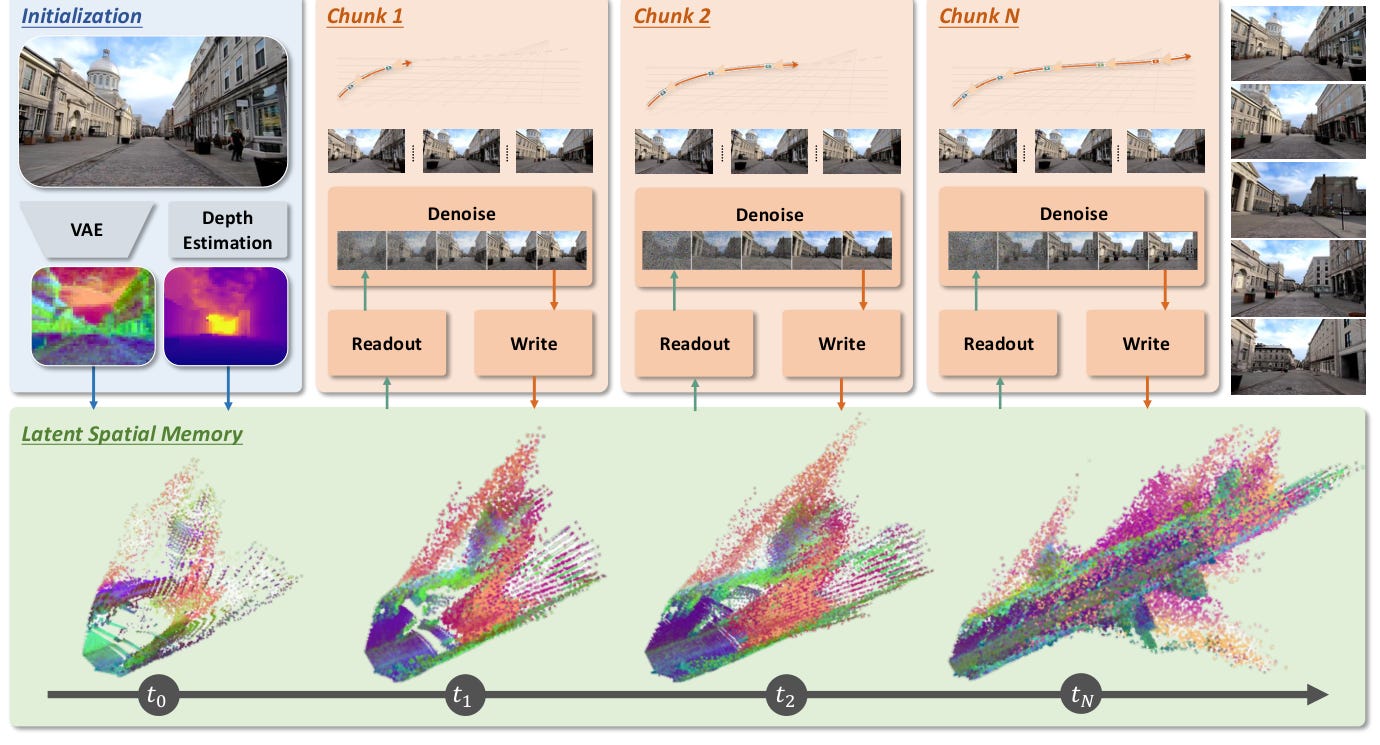
🌐 Mirage adds latent spatial memory – A video world model stored static scene content as 3D latent tokens, a latent spatial memory it read and updated during generation, reporting roughly ten times faster generation, far lower 3D cache memory, and stronger long-horizon spatial consistency.
🦾 Robots need more than VLAs – A position paper argued generalist robotics is bottlenecked not by policy scaling but by the lack of mechanisms to turn unstructured behavioral data into grounded supervision, proposing four missing interfaces for data, embodiment, world models, and reward.
TTY Lunch
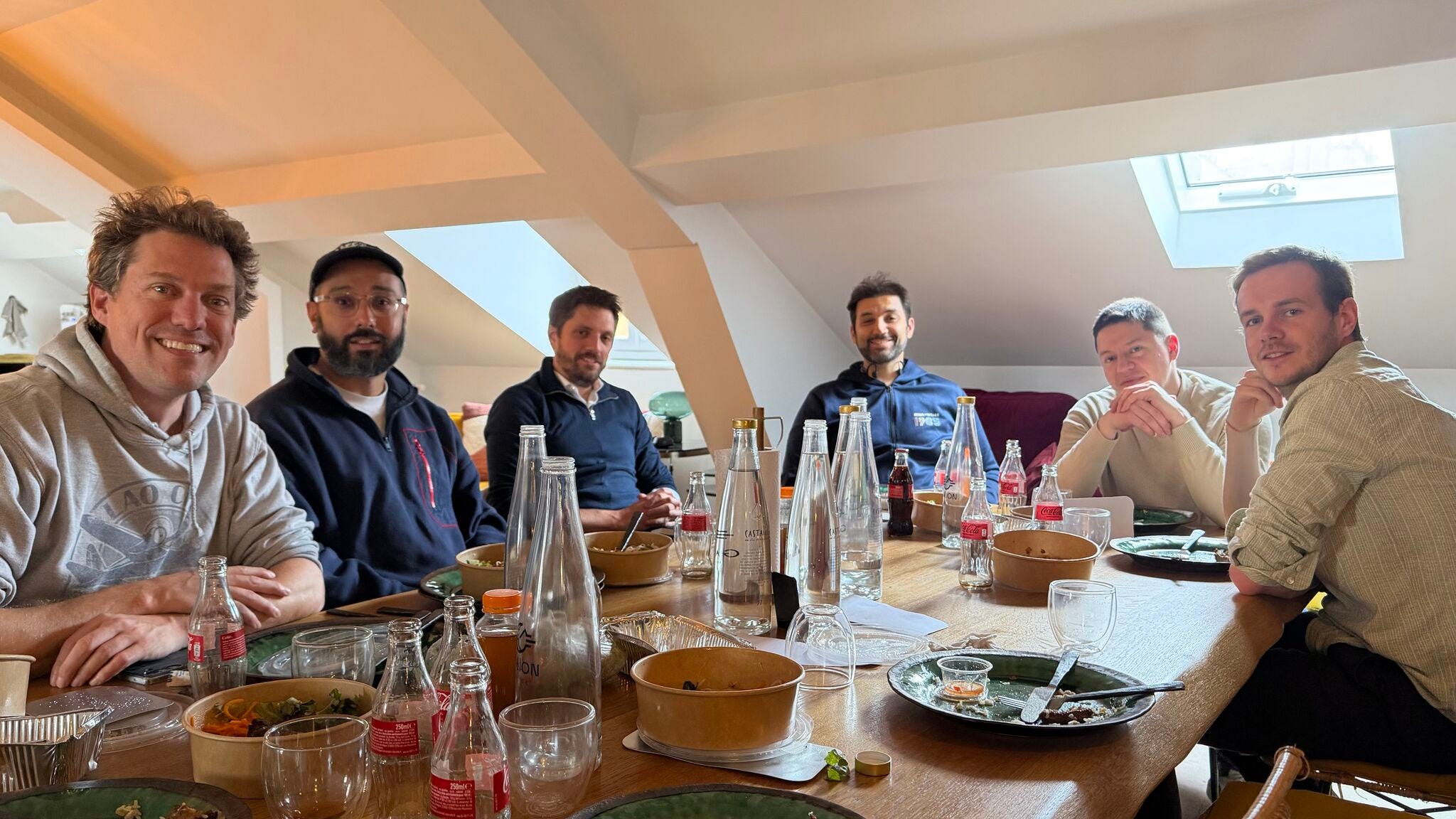
This week’s lineup included Alvaro Lamarche Toloza (Mago), Antoine Sueur (Pletor), Gregory Zussa, Henri Mirande, Hugo Venturini (SkipLabs), Julien Duquesne (Scienta), Khaled Maâmra (Edgee), and Mehdi Medjaoui (A La French Podcast).
Topics included, in no particular order: SRE and deployment practices at Meta, the new loop concept/buzzword of the week, AI gateway infrastructure for token optimization, the organizational and cultural friction of AI adoption across fragmented developer demographics, compute economics and the looming capital shortage, the frustration with Claude Fable 5 being incredibly expensive, slow, and purposefully limited on sensitive biological and AI research tasks, the strategic corporate pivot toward hosting local open-source models to escape proprietary bills, the productivity drain of over-inflated AI-generated tests clogging CI/CD pipelines, and the Dassault Systemes’ historical 2D version control system.
Thank you for joining and the great discussion.
Contributors This Week
Kevin Kuipers, Félix Raimundo, Gabriel Olympie, Tejas Chopra, Ihab Bendidi, Jeremie Kalfon, Daniel Madalitso Phiri, Julien Duquesne, Glenn Sonna, Karim Matrah, Khalil Ouardini, Leonard Strouk, Pierre Chapuis, Antoine Sueur, Aram Adamyan, Charly Poly, Gabriel Duciel, Harsimrat Singh Sandhawalia, Jocelyn Fournier, Jules Belveze, Quentin Dubois, Raymond Rutjes