
TTY-changelog #041
AI agents push pure RL. Biotech models advance. 4D video and 3D rendering improve. A critical Linux exploit spreads. Coding shifts toward agent orchestration and automation.

👉 Article originally posted on TTY
Audio
🎙️ VibeVoice now on Hugging Face – Microsoft’s open-source 8B speech model gained a Transformers-compatible build on Hugging Face, enabling direct inference without custom setup. The model handles 60-minute audio in a single pass with speaker diarization and timestamps across 51 languages.
Autonomous Agents
🧠 Ineffable Intelligence bets on pure RL – David Silver, co-creator of AlphaGo, launched Ineffable Intelligence to build a superlearner driven entirely by reinforcement learning from environment experience, without relying on human-generated training data, aiming at what the company calls first contact with superintelligence.
⚡ Stripe Projects for agent provisioning – Stripe launched a developer preview letting developers and agents provision hosting, databases, auth, analytics, and other services from the CLI. Credentials sync back to the local environment automatically, and billing consolidates across all connected providers.
🗺️ What to learn in AI agents – A practitioner’s guide on durable vs transient knowledge in the current agent landscape, arguing that framework API mastery compounds poorly while systems thinking, debugging intuition, and taste for boring architectural choices remain the skills worth building.
Biotech, Health, and Chemistry
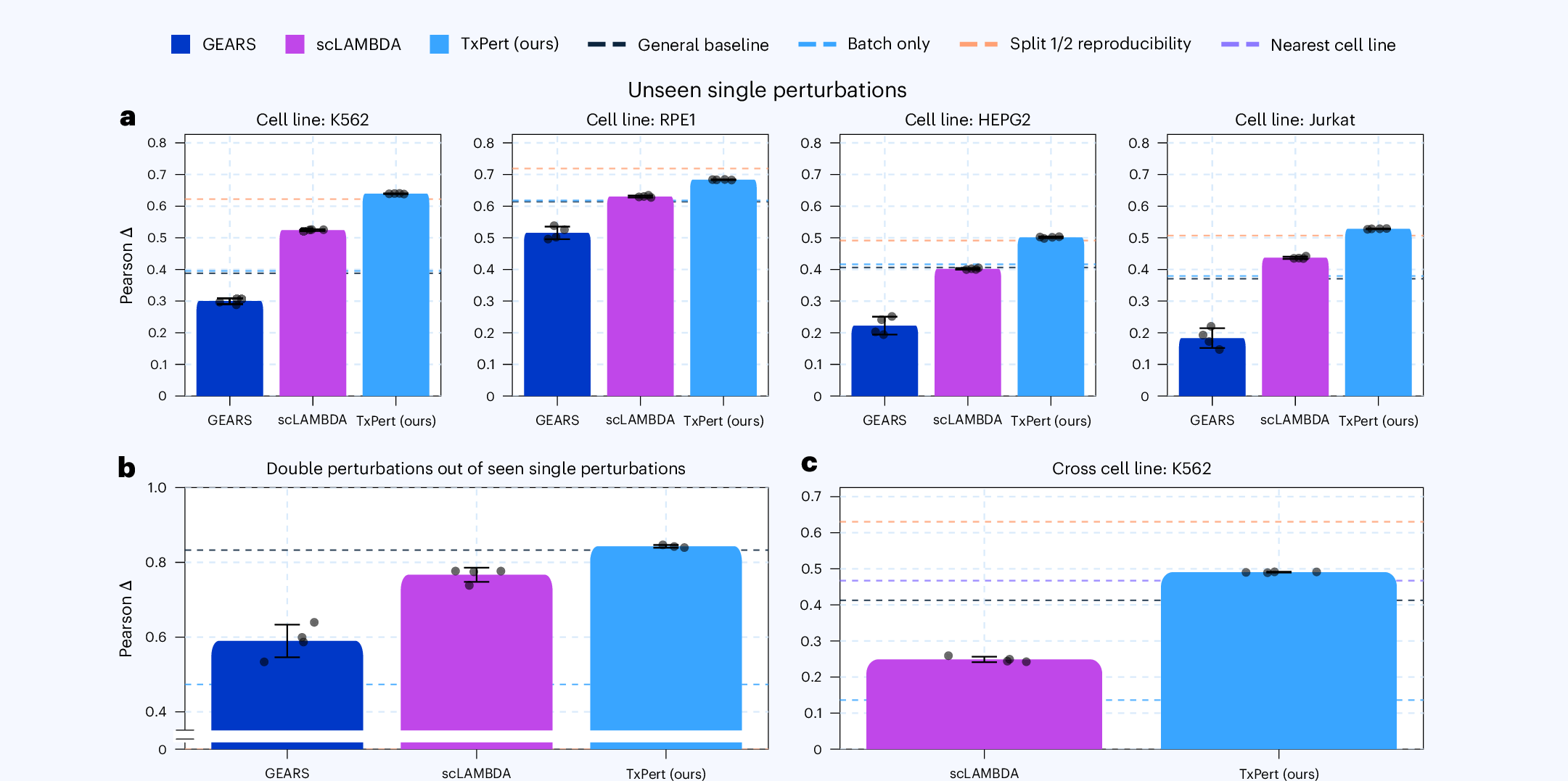
🔬 TxPert reaches Nature Biotechnology – A knowledge-graph approach to predicting transcriptomic perturbation effects achieved performance close to split-half experimental reproducibility for single unseen perturbations, and outperformed existing methods by 8 to 25% on double perturbations and cross-cell-line predictions. The first model in this class to move from preprint to peer-reviewed publication.
🌊 Virtual cell research at ICLR 2026 – Reflections from ICLR 2026 in Rio mapped the fragmentation in the virtual cell field: more models and investment than ever, but no shared evaluation infrastructure or common definitions. The piece argued for disease-specific models over universal cell simulators, with Eva from Scienta Lab cited as a positive example.
🧪 Orthrus RNA isoform foundation model – A Mamba-based mature RNA foundation model pretrained via contrastive learning on splicing isoforms and orthologous transcripts across 400+ mammalian species, published in Nature Methods. It outperforms genomic foundation models on mRNA property prediction with substantially less fine-tuning data. The first author co-founded blank.bio, applying the same approach to clinical precision medicine.
Image, Video & 3D
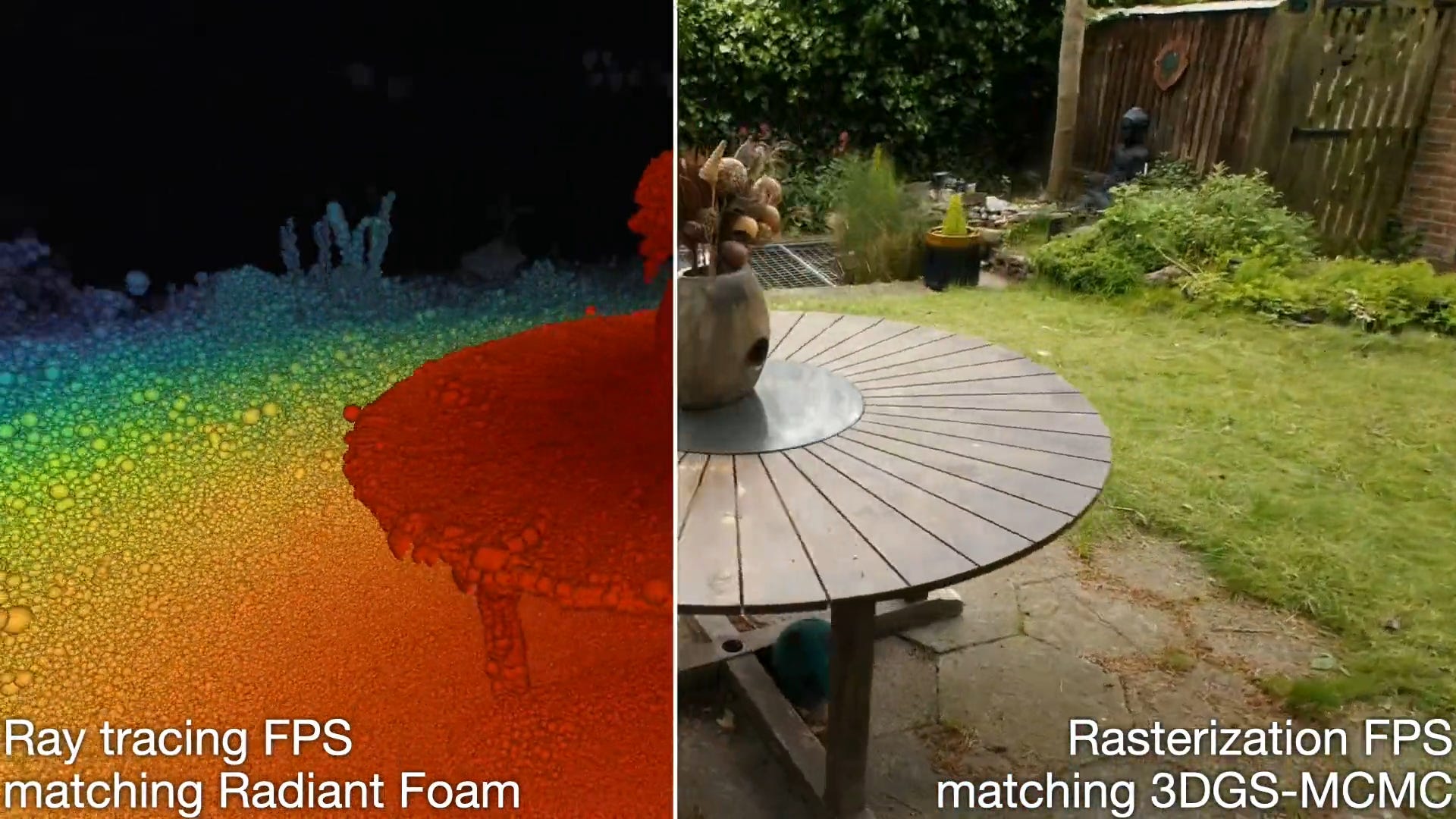
🔮 Power Foam: ray tracing meets rasterization – A differentiable 3D representation combining foam-based ray tracing efficiency with 3DGS-level rasterization performance. Uses bounded power diagrams with controllable cell extents to achieve consistent high-frame-rate output under both rendering paradigms from the same scene representation.
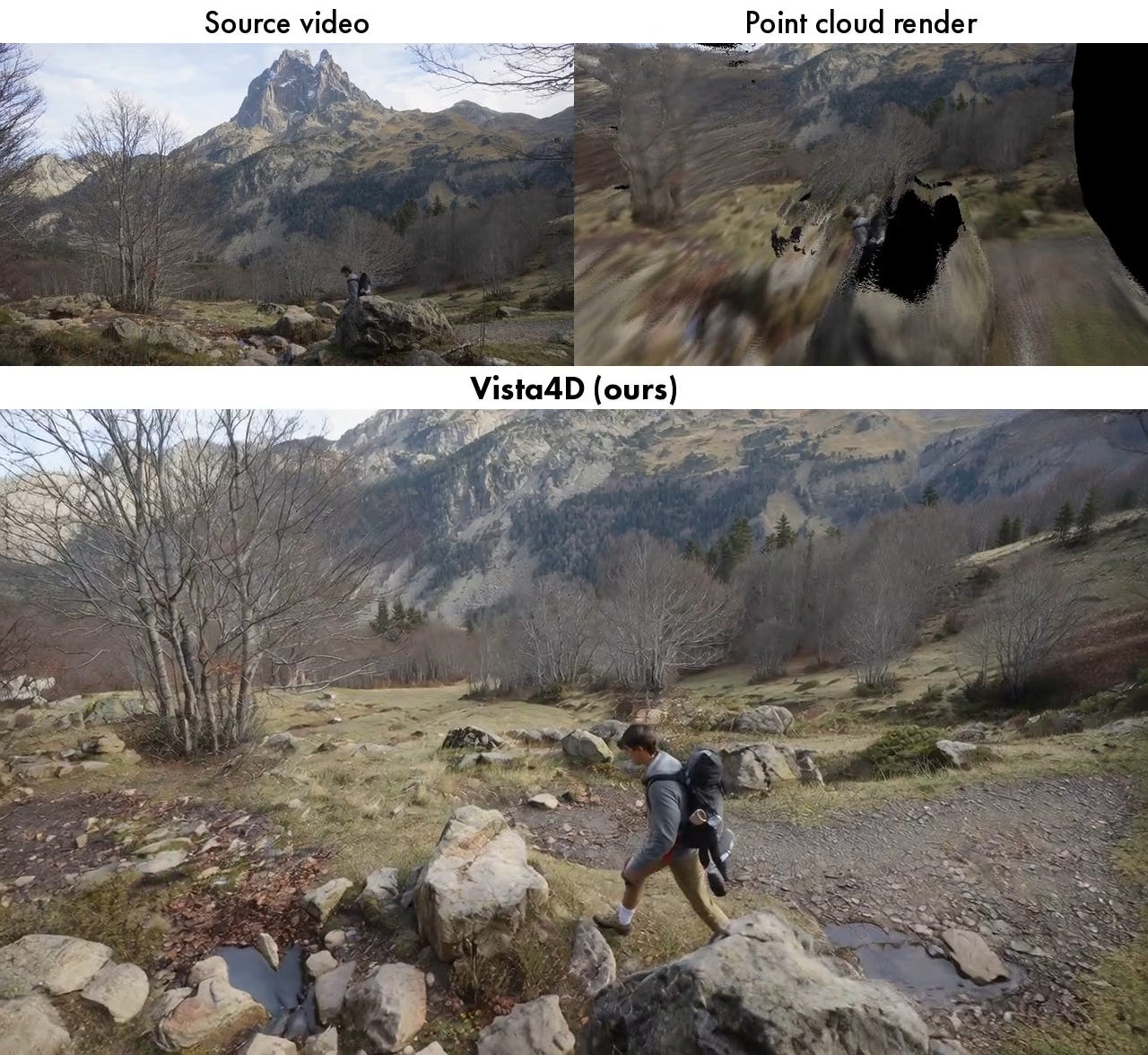
🎬 Vista4D video reshooting via 4D – A video reshooting framework from Eyeline Labs (powered by Netflix) that grounds input video and target cameras in a 4D point cloud, enabling novel-viewpoint synthesis while preserving scene dynamics. Supports camera trajectory changes, 4D scene recomposition, and dynamic scene expansion.
Cyber
🔴 CVE-2026-31431: critical Linux LPE – A 732-byte Python script roots every Linux distribution shipped since 2017 (!) by chaining a logic bug in authencesn through AF_ALG and splice() into a page-cache write. Requires only an unprivileged local user account, no race window, and no per-distro kernel offset.
The exploit works unmodified on Ubuntu, Amazon Linux, RHEL, and SUSE without any per-distribution tuning, and is expected to behave identically on Debian, Arch, Fedora, and other distros running affected kernels.
Kubernetes and multi-tenant environments carry the highest risk, as the shared page cache allows a pod with the right primitives to cross tenant boundaries and compromise the entire node.
Priority patching applies to multi-tenant Linux hosts, CI runners executing untrusted PR code, container clusters, and any environment running tenant-supplied notebooks, agents, or serverless functions.
Infrastructure
🏥 Scaleway wins France’s Health Data Hub – Following a rigorous 350-criteria selection process, Scaleway was designated to host France’s Health Data Hub including a copy of the national health database. The selection turned on HDS certification and a credible roadmap toward SecNumCloud qualification.
Community take w/ Robert Hommes: “The Dutch government and central bank also announced Stackit sovereign cloud pilots. And there’s Euro-Office, an EU-driven initiative for a sovereign, Microsoft-compatible office suite to replace US alternatives.”
💥 AI agent wipes production database – A coding agent running on Cursor + Opus 4.6 used a Railway API token created for domain operations to delete both a production database and all volume-level backups in 9 seconds. Railway stores volume backups within the volume itself, and tokens provisioned via the CLI carry undisclosed blanket authority over the entire GraphQL API, including destructive volume deletion.
Language Models
📉 DeepSeek slashes V4-Pro API prices – V4-Pro input token prices dropped 75% in a promotional offer running until May 5, with the model already undercutting GPT-5.5, Claude Opus 4.7, and Gemini 3.1 Pro at full price. Cache hit prices were simultaneously cut to one-tenth across the entire API suite, targeting agentic applications with repetitive inputs.
Programming
🎼 Symphony: open spec for Codex orchestration – OpenAI published Symphony, a written spec that turns issue trackers like Linear into always-on agent orchestrators, assigning one Codex agent per open task. Internal use yielded a 500% increase in landed pull requests on some teams.
🖥️ Zed editor hits version 1.0 – The Rust-based collaborative code editor shipped its first stable release.
🤖 Laguna XS.2 for agentic coding – Poolside’s first public model is a 33B parameter MoE with only 3B activated per token, designed for agentic coding and long-horizon tasks on local hardware. Scores 68.2% on SWE-bench Verified and runs on a Mac with 36GB RAM via Ollama under Apache 2.0.
💬 Karpathy on LLM new horizons – A fireside chat at Sequoia Ascent 2026 argued that LLMs enable three genuinely new capability categories beyond productivity gains: apps fully reducible to LLM inputs and outputs, plain-language install instructions replacing bash scripts, and unstructured knowledge bases previously impossible with classical code.
🧱 Better-T-Stack interactive stack builder – An interactive web UI for composing a TypeScript full-stack from modular picks across frontend, backend, runtime, database, auth, and native layers, generating a ready-to-run CLI command on the fly.
🎥 AI coding works, that’s the problem – A YouTube essay mapped the quantitative impact of AI on software development in web and game dev, then examined the economic and career consequences, arguing that accelerating output does not automatically preserve demand for individual developers.
Contributors This Week
Félix Raimundo, Ihab Bendidi, Aly Moursy, Robert Hommes, Youssef Tharwat, Quentin Dubois, Christophe Lesur, Louis Choquel, Timothy Lindblom, Amine Saboni, Antoine Millet, Gabriel Duciel, Gabriel Olympie, Hani Chalouati, Hugo Hernandez, Karim Matrah, Louis Manhes, Paul Masurel, Stan Girard